Home Canning for Beginners: How to Get Started Safely
Learn how home canning works, which method matches your food, and what equipment you need to preserve safely without the overwhelm.
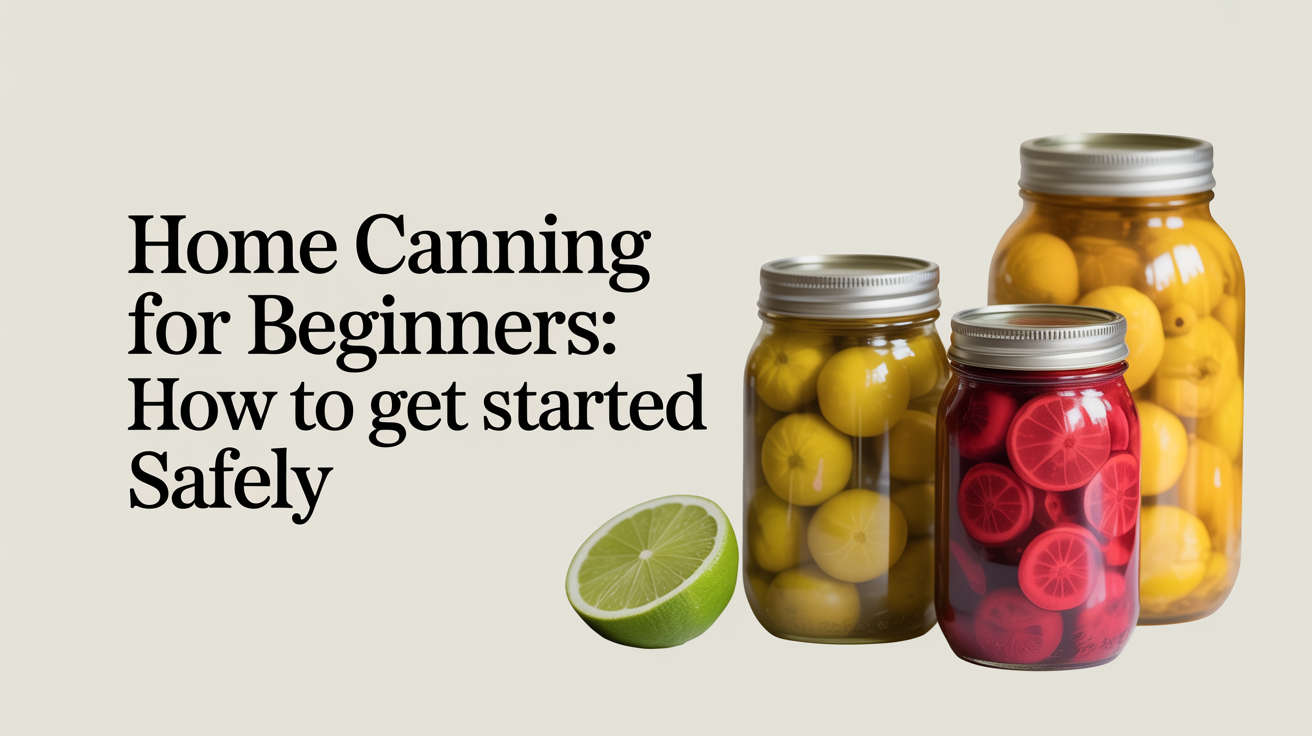
Home canning is one of the most satisfying things you can do in a kitchen. You pick produce at its peak, pack it into jars, and end up with a pantry full of food you made yourself, food you know exactly what went into. The learning curve is real but not steep. Most beginners are surprised by how approachable it feels after that first successful batch of strawberry jam.
This guide covers the core ideas: what canning actually does, the two main methods and why the distinction matters, the equipment you'll need to get started, and the one rule that makes everything safe. If you want to dig into the full science behind preservation, how canning preserves food and creates a shelf-stable seal is worth a read once you have the basics down.
What Home Canning Actually Does
Canning creates an airtight, vacuum-sealed environment that blocks spoilage. When you heat a filled jar and then let it cool, the air inside contracts and pulls the lid down tight. That seal is what keeps bacteria, molds, and yeasts out. A properly processed, sealed jar can stay shelf stable for a year or more.
The heat during processing does two jobs at once. It drives air out of the jar to create the vacuum, and it kills or deactivates the microorganisms that cause spoilage. Different pathogens need different levels of heat to be destroyed, which is exactly why choosing the right canning method is non-negotiable.
The Two Methods: Water-Bath and Pressure Canning
Every home canning project uses one of two methods. Choosing the wrong one for your food is not just a quality issue. It is a safety issue. Understanding this distinction is the single most important thing a beginner can learn.
Water-Bath Canning
A water-bath canner is a large pot with a rack inside. You submerge sealed jars in boiling water (212°F / 100°C at sea level) for a specified time, then lift them out and let them cool. The boiling-water environment is enough to make certain foods safe for shelf storage.
High-acid foods are the right candidates here. Acid creates an environment hostile to the most dangerous pathogens, so boiling water is sufficient to destroy everything else. Foods that fall into the water-bath category include:
- Most fruits and fruit-based jams, jellies, and preserves
- Properly acidified tomato products (tomatoes require added lemon juice or citric acid)
- Pickles made with vinegar
- Fruit-based salsas and chutneys
If you want to understand exactly why pH determines which method you use, why acidity matters in canning goes deeper on the chemistry.
Pressure Canning
A pressure canner is a sealed, weighted pot that builds steam pressure inside, raising the internal temperature well above boiling to typically around 240°F (116°C). That higher temperature is the only reliable way to destroy Clostridium botulinum spores, which produce the toxin responsible for botulism.
Low-acid foods must be pressure canned. There are no shortcuts and no workarounds. Adding vinegar or lemon juice to a low-acid food does not make it safe for water-bath canning unless a tested recipe specifically says so. Foods that require pressure canning include:
- Plain vegetables (green beans, corn, carrots, beets without pickling brine)
- Dried beans and lentils
- Meats, poultry, and fish
- Soups, stews, and broths
- Combination products like chili or pasta sauce with meat
Never use a water-bath canner for low-acid foods. Botulism toxin is colorless, odorless, and tasteless. There is no way to tell a contaminated jar from a safe one without testing. The rule exists because the consequences of getting it wrong are serious.
For a full side-by-side comparison of both methods, see water-bath vs. pressure canning: which method do you need.
Equipment You'll Need to Get Started
You do not need a fully stocked kitchen to begin. Most beginners start with water-bath canning, which has a shorter equipment list and a gentler learning curve.
For Water-Bath Canning
| Item | What to Look For |
|---|---|
| Water-bath canner or large stockpot | Tall enough that jars are covered by at least 1-2 inches of water |
| Canning rack | Keeps jars off the pot bottom so water circulates; some pots include one |
| Mason-style canning jars | Regular-mouth or wide-mouth; check for chips or cracks before use |
| New lids | Two-piece lids: the flat lid must be new each time; bands can be reused |
| Jar lifter | Silicone-grip lifter keeps hot jars steady |
| Canning funnel | Makes filling jars much cleaner |
| Bubble remover / headspace tool | Often a thin plastic spatula; helps release trapped air and measure headspace |
| Clean cloths | For wiping jar rims before placing lids |
For Pressure Canning
Everything above, plus a dial-gauge or weighted-gauge pressure canner. A dial-gauge model requires annual accuracy testing (your local cooperative extension office usually does this free). A weighted-gauge model is simpler because it regulates itself automatically. Both types work well; just follow the manufacturer's instructions and your tested recipe's pressure requirements.
You do not need an electric multi-cooker marketed as a "pressure canner" substitute. USDA-tested processing times were developed for stovetop pressure canners, and most electric models have not been validated for low-acid canning. Stick with equipment that matches your tested recipe.
The Golden Rule: Tested Recipes Only
This section deserves extra attention because it surprises a lot of new canners.
Home canning is not a formula you can improvise. The processing time in a tested recipe is not an estimate. It is the minimum time required to bring every part of that specific jar of food to a safe temperature, given a specific density, headspace, and pack style. Change the recipe and you change the heat penetration. Swap jar sizes without adjusting the time and you may under-process.
This means you should not scale up ingredient proportions in a jam recipe, thicken a sauce more than the recipe specifies, or substitute vegetables in a salsa unless you are working from a tested version of that variation.
Reliable sources for tested canning recipes include:
- USDA Complete Guide to Home Canning: free online from the National Institute of Food and Agriculture
- National Center for Home Food Preservation (NCHFP): nchfp.uga.edu, searchable by food type
- Ball Blue Book or Ball Complete Book of Home Preserving: widely available and regularly updated
- University cooperative extension offices: many publish regional guides, especially useful for altitude adjustments
Altitude matters too. If you live above 1,000 feet, processing times and pressure levels need to be adjusted. Your tested recipe or the NCHFP website will tell you exactly how.
Easy First Projects for Beginners
Starting simple is the right call. You'll learn the rhythm of the process: sterilizing jars, filling to the correct headspace, wiping rims, setting lids, processing, and checking seals. Once the steps feel natural, you can tackle more involved recipes with confidence.
Strawberry jam is the classic first project for a reason. The ingredient list is short (fruit, sugar, and sometimes pectin), the technique is forgiving, and you'll use water-bath canning, which has fewer variables than pressure canning.
Bread-and-butter pickles are another excellent starting point. The vinegar brine makes them high-acid, so water-bath canning applies. They're ready to eat in a couple of weeks and genuinely hard to mess up.
Whole tomatoes or crushed tomatoes make a good next step. Tomatoes sit right on the pH border between high- and low-acid, which is why tested recipes require added lemon juice or citric acid. Processing them teaches you the importance of acidification and gives you a pantry staple that pays off all winter.
Once you're comfortable with those three, pressure-canned green beans are a natural step up into low-acid territory.
Checking Seals and Storing Safely
After jars cool for 12-24 hours, check each seal by pressing the center of the lid. A sealed lid will be concave and won't flex when pressed. Any lid that pops up and down has not sealed.
Unsealed jars should go straight into the refrigerator and be used within a few days. They are fine to eat; they are just not shelf stable. Do not reprocess an unsealed jar unless you do so immediately with a fresh lid, and only if the food and jar are still hot.
Store sealed jars in a cool, dark place. Most home-canned foods are best used within 12-18 months for peak quality, though a properly sealed jar can remain safe longer. Label every jar with the contents and date so you always know what you have.
Before opening any stored jar, look it over carefully. Discard—without tasting—any jar with a bulging lid, spurting liquid, off smell, foam, or visible mold. The NCHFP's guidance is direct: when in doubt, throw it out. Never taste food from a jar you suspect might be spoiled.
FAQ
Is home canning safe for beginners?
Yes, absolutely. The risks come from improvising or cutting corners, not from the process itself. Beginners who stick to established guidelines (USDA, NCHFP, Ball) and start with simple high-acid recipes like jams or pickles have an excellent safety record. Follow tested recipes and use the correct method for your food and you will be fine.
Can I reuse jar lids from last year?
No. The flat lid should be new every time you can. The sealing compound on used lids may not form a reliable vacuum seal. Bands (the screw rings) can be reused as long as they are not rusty or warped, but flat lids should always be fresh.
What's the difference between a jar that sealed and one that didn't?
A properly sealed lid is concave (dipped down in the center) and makes no sound when you press it. An unsealed lid will flex and give a popping sound when pressed. You can also tap the center with a spoon: a sealed jar produces a clear, high-pitched ring, while an unsealed jar sounds dull or hollow.
Do I have to use special canning jars?
Yes. Standard Mason-style canning jars are designed to withstand the heat and pressure of processing. Commercial food jars (pasta sauce, mayonnaise, salsa) are not tempered for repeated home canning use and can crack or fail to seal reliably. Stick with proper canning jars and inspect them for chips or cracks before every use.
How do I know if I need to adjust for altitude?
If you live above 1,000 feet elevation, you need to increase processing times for water-bath canning and adjust pressure for pressure canning. The NCHFP website has altitude adjustment charts, and most tested recipes include a note on modifications. Your local cooperative extension office can also help you find the right adjustments for your area.