Why Acidity Matters in Canning (High-Acid vs Low-Acid Foods)
Learn why the pH 4.6 dividing line is the most important number in home canning, how to classify foods, and which method keeps your jars safe.
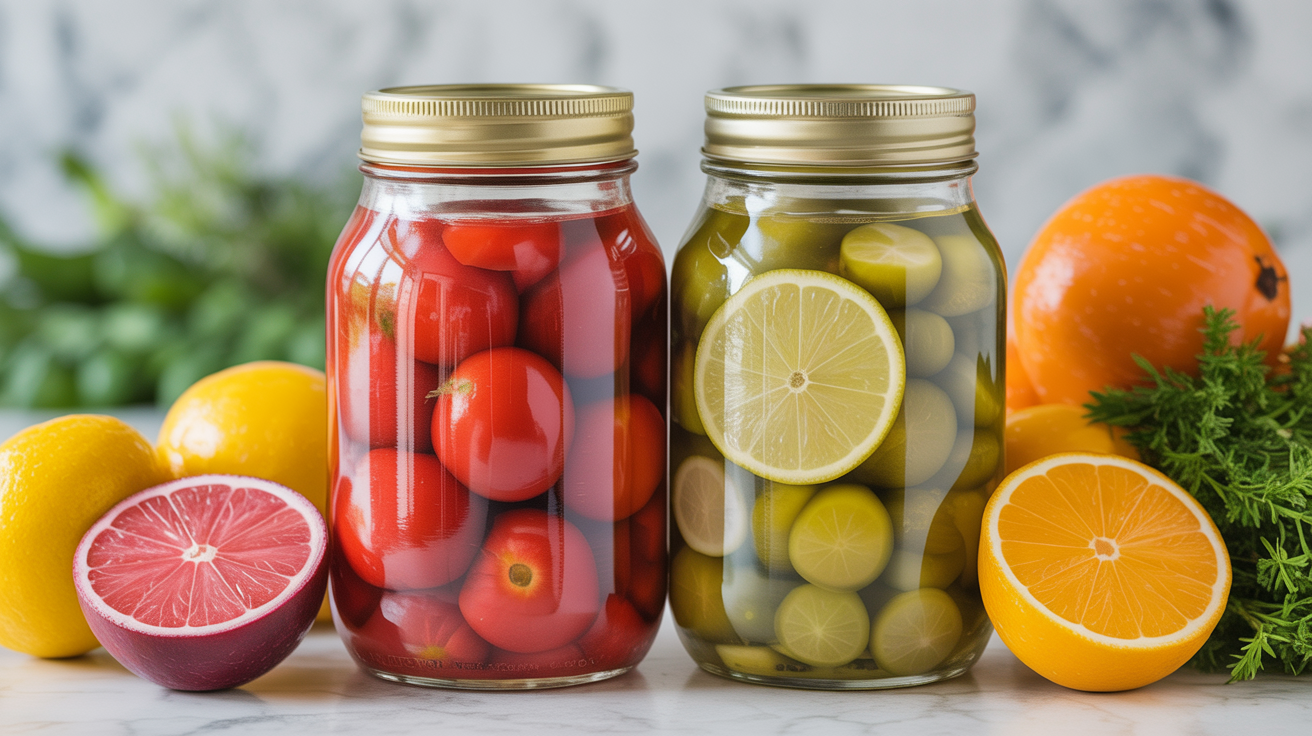
Before you fill a single jar, there is one concept that underpins every canning decision you will ever make: acidity. Specifically, a food's pH level determines whether you can safely process it in a boiling-water bath or whether you absolutely must reach for a pressure canner. Get this right and your pantry shelves are safe; get it wrong and the consequences can be severe. This guide walks you through the science in plain terms so you can approach every canning project with confidence.
The Number That Runs the Show: pH 4.6
pH is a scale from 0 to 14 that measures how acidic or alkaline something is. Lower numbers mean more acid. The number 4.6 sits at the center of canning safety because it marks the boundary below which the bacterium Clostridium botulinum cannot produce its deadly toxin.
C. botulinum is the organism behind botulism, a potentially fatal illness. The spores are heat-resistant and can survive a boiling-water bath. In a low-acid, oxygen-free environment, exactly what a sealed jar provides, those spores can germinate and release toxin. Acid changes that equation. At or below pH 4.6, the environment is hostile enough to prevent toxin formation even if spores survive the heat treatment.
This is why the dividing line matters so much. It is not an arbitrary cutoff; it is the point at which acidity alone provides a meaningful safety barrier that allows a lower-heat process to be sufficient.
High-Acid Foods (pH 4.6 or Below)
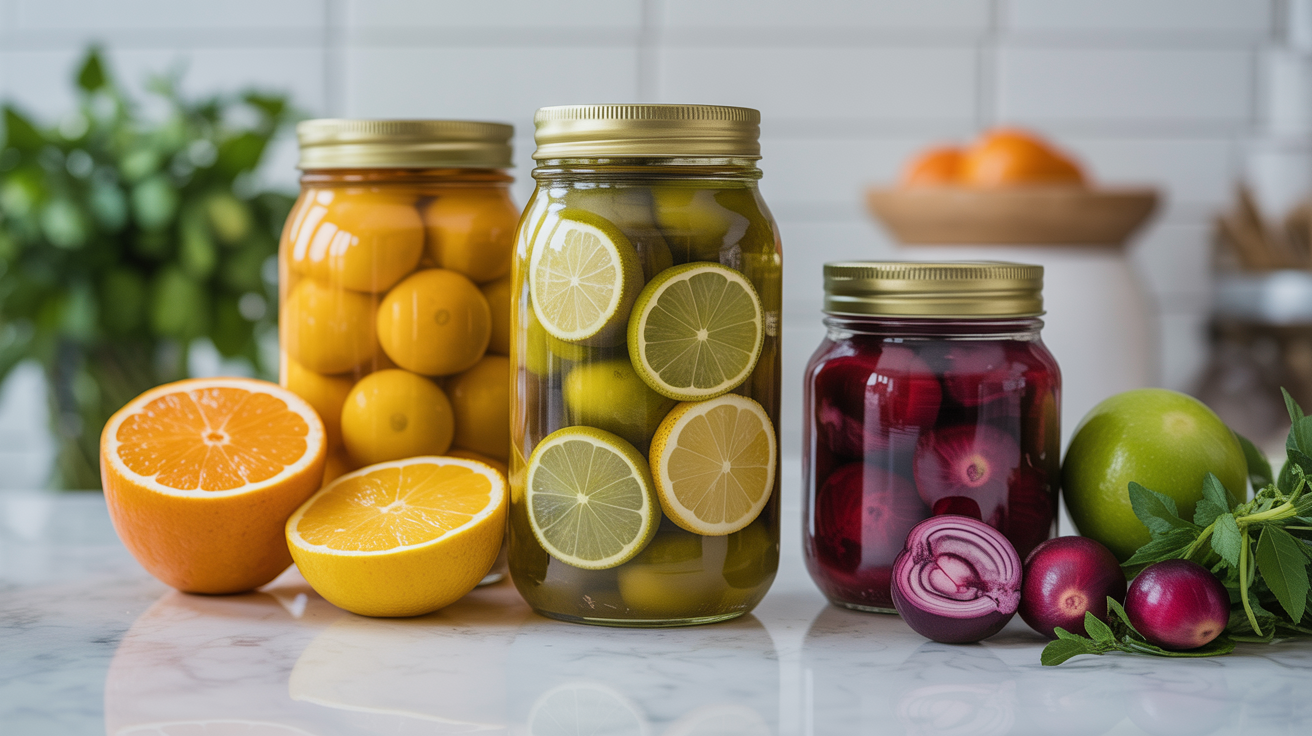
High-acid foods are the natural candidates for water-bath canning. Their own acidity does a significant portion of the preservation work, so the rolling boil of a water bath, reaching 212 degrees Fahrenheit at sea level, is enough to destroy spoilage organisms and seal the jar safely.
What Falls into This Category
Most fruits come in well below pH 4.6. Strawberries, blueberries, peaches, cherries, and apples all sit comfortably in the high-acid zone. The same goes for fruit juices, most jams and jellies, and fermented or vinegar-pickled vegetables. Properly acidified tomatoes and figs also belong here, more on that in a moment.
Some examples worth knowing:
- Strawberries: around pH 3.0 to 3.9
- Peaches: around pH 3.3 to 4.0
- Apple juice: around pH 3.3 to 4.0
- Dill pickles (brined in vinegar): around pH 3.2 to 3.5
- Standard jams and fruit preserves: typically pH 3.0 to 3.5
For all of these, following a tested water-bath recipe from a trusted source like the USDA Complete Guide to Home Canning or the National Center for Home Food Preservation (NCHFP) gives you a safe, reliable outcome. You can find beginner guidance on choosing the right method in this site's overview at /posts/water-bath-vs-pressure-canning-which-method-do-you-need.
Low-Acid Foods (pH Above 4.6)
Low-acid foods are where botulism risk lives. Plain vegetables, beans, meats, poultry, seafood, and most soups all have a pH above 4.6. A boiling-water bath simply cannot get hot enough to eliminate botulism spores reliably in these foods. The only safe home-canning method for low-acid foods is a pressure canner, which reaches 240 degrees Fahrenheit under pressure, hot enough to destroy spores.
This is not a matter of personal preference or kitchen philosophy. It is established food science, and no amount of extra boiling-water bath time compensates for the temperature gap.
Common Low-Acid Foods
- Green beans, corn, carrots, beets (plain, not pickled)
- Dried beans and legumes
- Potatoes
- All meats, poultry, and fish
- Soups and mixed meals
- Pumpkin and winter squash (pureed pumpkin is not approved for home canning at all)
If a neighbor or old family recipe suggests you can simply boil low-acid vegetables longer in a water bath, that advice predates modern food safety research. Do not follow it. If you are just getting started, /posts/home-canning-for-beginners-how-to-get-started-safely covers equipment decisions alongside this method question.
The Borderline Cases: Tomatoes and Figs
Tomatoes are the food that confuse beginners most often, and for good reason. Modern tomato varieties often have a pH that hovers right around 4.6, sometimes dipping below it, sometimes creeping above. Figs have a similar problem, with a naturally mild flavor that reflects their higher pH.
Because neither food reliably falls below 4.6 on its own, every tested water-bath recipe for whole, crushed, or juiced tomatoes, and for figs, requires you to add measured acid before processing. The USDA and NCHFP specify either:
- Lemon juice: 2 tablespoons per quart jar (1 tablespoon per pint)
- Citric acid: one-half teaspoon per quart jar (one-quarter teaspoon per pint)
These are not suggestions. They are safety requirements built into the tested recipe. The acid lowers the pH reliably into the safe zone so that water-bath canning is appropriate.
You cannot substitute other acids, guess at amounts, or skip the step because the tomatoes "taste acidic." Follow the recipe exactly.
Acidification: How Recipes Change a Food's Safety Category
The tomato example leads to a broader principle worth understanding: acidification. Adding a measured amount of acid to a food, whether through vinegar, lemon juice, or citric acid, can move that food from the low-acid category into the high-acid category, making water-bath canning safe.
Pickling is the most common form of acidification. When you make dill pickles, you submerge cucumbers (a low-acid vegetable) in a vinegar brine that drops the overall pH well below 4.6. The result is a product that is safely water-bath processed. The same logic applies to pickled beets, pickled peppers, and many relishes.
The critical rule: you must follow the tested recipe's exact acid ratios. Reducing the vinegar to soften a sharp flavor, or thinning a brine with extra water, can raise the pH enough to compromise safety. The ratio of acid to food, not just the presence of vinegar, is what the recipe was tested to achieve.
For a deeper look at why heat and chemistry work together to preserve food, see /posts/how-does-canning-preserve-food-the-science-of-the-seal.
Acidity Classification at a Glance
| Food | Typical pH Range | Category | Safe Canning Method |
|---|---|---|---|
| Strawberries | 3.0 – 3.9 | High-acid | Water-bath |
| Peaches | 3.3 – 4.0 | High-acid | Water-bath |
| Apple juice | 3.3 – 4.0 | High-acid | Water-bath |
| Grape jam | 3.1 – 3.6 | High-acid | Water-bath |
| Dill pickles (vinegar brine) | 3.2 – 3.5 | High-acid (acidified) | Water-bath |
| Tomatoes with added acid | at or below 4.6 | High-acid (acidified) | Water-bath |
| Plain tomatoes (no added acid) | 4.0 – 4.6+ | Borderline | Not safe without acidification |
| Figs with added acid | at or below 4.6 | High-acid (acidified) | Water-bath |
| Green beans | 5.0 – 6.0 | Low-acid | Pressure canner only |
| Corn | 5.9 – 6.5 | Low-acid | Pressure canner only |
| Carrots | 5.9 – 6.3 | Low-acid | Pressure canner only |
| Chicken | 5.5 – 6.0 | Low-acid | Pressure canner only |
| Canned soups (mixed) | 5.0 – 6.5 | Low-acid | Pressure canner only |
Process times vary by food, jar size, and altitude. Always use current tested recipes from the USDA, NCHFP, or Ball, the table above classifies foods by method, not processing time.
Staying Safe: Practical Rules to Remember
Understanding the theory is useful, but a few simple habits carry it into practice:
Always verify your food's category before choosing a method. If you are unsure whether a food is high-acid or low-acid, look it up in a tested source before processing. The NCHFP website is free and searchable.
Never improvise with low-acid foods. Untested combinations of vegetables, proteins, and sauces have unknown pH values. If your recipe is not tested and approved, pressure canning is the only safe option, and even then, only if the individual components are approved for home canning.
Never taste food you suspect is spoiled. Botulism toxin is odorless and tasteless. A jar that looks and smells normal can still be dangerous. Discard any jar with a broken seal, unusual odor, spurting liquid, or visible mold without tasting its contents. When in doubt, throw it out.
Altitude affects processing times, not the acid rules. At higher elevations, water boils at a lower temperature, so water-bath processing times increase and pressure settings change. The acid classification of your food does not change with altitude, only the heat treatment adjustments.
FAQ
Can I use pH test strips to check whether my food is safe for water-bath canning?
Home pH strips are not precise enough to rely on for canning safety decisions. They can give you a rough reading, but they cannot distinguish between pH 4.4 and pH 4.8 with enough accuracy to stake your family's health on it. Use tested recipes, the testing was done in laboratory conditions using calibrated equipment. If a recipe calls for added acid, add it.
What happens if I water-bath can a low-acid food by accident?
The jar may look and smell perfectly normal. That is the danger. Botulism toxin can be present in food that passes every visual and odor test. If you realize a low-acid food was water-bath processed rather than pressure canned, discard the jar without opening it, or neutralize and dispose of it following your county extension office's guidance. Do not risk it.
Do I need to add acid to every tomato product?
Only if the product is destined for water-bath canning. Pressure canning tomatoes does not require added acid because the high heat of pressure processing destroys botulism spores regardless of pH. If your tested recipe is a pressure-canning recipe for tomatoes, follow it as written, it may not call for lemon juice. If it is a water-bath recipe, the acid addition is non-negotiable.
Are there any vegetables I can water-bath can without pickling them?
No. All plain vegetables are low-acid and must be pressure canned. The only exception is when they have been transformed by acidification, pickled in a tested vinegar brine, in which case the whole product, including the vegetables, has been brought into the high-acid range by the recipe.
My grandmother water-bath canned green beans for decades without anyone getting sick. Why is it considered dangerous now?
Botulism from improperly canned food is relatively rare in absolute terms, which is part of why older methods persisted as long as they did. But rare is not safe. The science demonstrating why botulism spores survive boiling-water processing of low-acid foods has not changed, it was not well understood or widely communicated in earlier generations. The risk was always there; we now know how to eliminate it reliably. A pressure canner is the straightforward solution.