A Beginner's First Canning Project: Start Here
Not sure what to can first? Start with high-acid water-bath projects like jam, pickles, or applesauce, forgiving, safe, and satisfying for beginners.
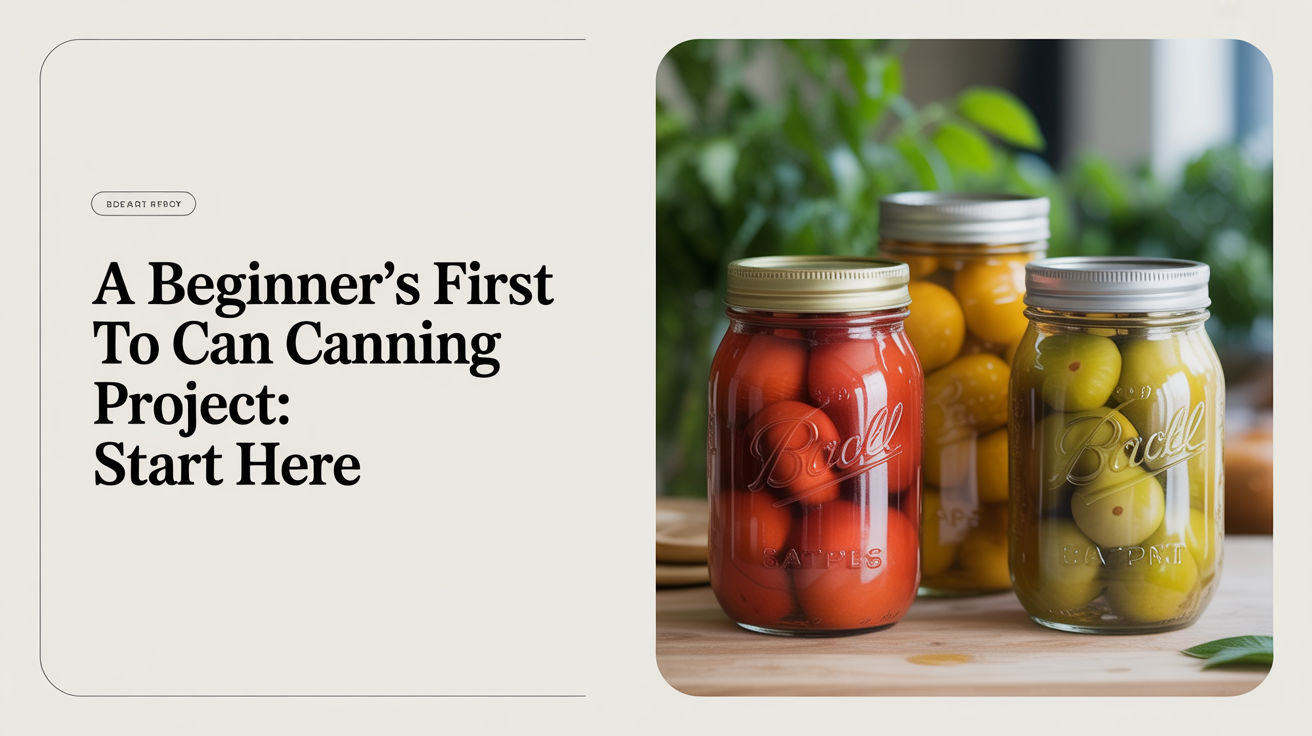
Home canning has a learning curve, but your first project does not need to be complicated. The key is choosing something that gives you a wide margin for error while you get comfortable with the process. High-acid foods processed in a water-bath canner are that starting point for a good reason.
Why High-Acid Foods Are the Right First Choice
Acidity is the dividing line in home canning. High-acid foods, generally those with a pH below 4.6, create an environment where harmful bacteria cannot thrive during water-bath processing. That makes them genuinely forgiving for beginners who are still dialing in their technique.
Low-acid foods, including most plain vegetables, beans, and all meats, require a pressure canner to reach temperatures high enough to destroy dangerous bacteria, including the one that causes botulism. That is not a method you want to tackle on your first day. Start with high-acid projects, build your confidence, and add pressure canning later once the basics are solid.
You can read more about the two canning methods and when each applies.
Three Projects Worth Starting With
These three options cover different skill levels and produce results you will actually use. All three can be processed in a standard water-bath canner.
Strawberry or Blueberry Jam
A small batch of jam, typically two or three half-pint jars, is probably the most common first canning project for good reason. The ingredient list is short (fruit, sugar, pectin), the processing time is brief, and hearing those lids pop as the jars seal is one of the more satisfying sounds in a home kitchen.
Use a current tested recipe from the USDA Complete Guide, the National Center for Home Food Preservation (NCHFP), or the Ball Blue Book. These sources specify exact processing times and the correct pectin-to-fruit ratios that keep the pH safe. Improvising jam recipes is fine for refrigerator jam; it is not appropriate for shelf-stable canned jam.
Dill Pickles or Quick Bread-and-Butter Pickles
Pickles are forgiving because the vinegar you add does the acidifying work for you. A tested recipe will specify a minimum vinegar acidity, typically 5 percent acidity white or cider vinegar, so the finished product reliably hits a safe pH regardless of the cucumbers you start with.
Cucumbers can turn soft if over-processed, which gives you immediate feedback on your timing. That makes pickles useful practice. Bread-and-butter pickles tend to have a slightly shorter processing time and a sweeter flavor profile that many beginners find approachable.
Applesauce
Plain applesauce is one of the gentler introductions to canning because apples are naturally high-acid and the prep work is straightforward. You cook the apples down, run them through a food mill or immersion blender, and process the jars. A batch yields a useful pantry staple and lets you practice filling jars cleanly and checking headspace without any pectin or vinegar to manage.
What You Need Before You Start
You do not need a lot of equipment for a water-bath project, but a few items are not optional.
| Item | Notes |
|---|---|
| Water-bath canner | A large stockpot with a fitted rack works if it is tall enough to cover jars by at least 1 inch of water |
| Mason jars | Use jars specifically made for home canning; reused commercial jars are not reliable |
| New lids | Reuse bands, but always use new flat lids for each batch |
| Jar lifter | Pulling hot jars out of boiling water without one is genuinely dangerous |
| Wide-mouth funnel | Not required, but it dramatically reduces spills and cleanup |
| Tested recipe | Not optional, this is the safety anchor for every batch |
You can find a full breakdown of required versus optional gear on the home canning for beginners guide.
A First-Batch Plan That Builds Confidence
Before you touch a jar, read your chosen recipe all the way through. Then read it again. Canning rewards people who know what comes next before it needs to happen.
A useful approach for a first batch:
- Choose one recipe from a tested source and gather every ingredient and piece of equipment before you start.
- Prepare your jars by washing them in hot soapy water or running them through the dishwasher. Keep them warm until you fill them so thermal shock does not crack the glass.
- Start your canner heating while you prepare the recipe. Bringing that much water to a boil takes longer than most beginners expect.
- Fill jars carefully, leaving the headspace the recipe specifies. Too much or too little headspace affects how the lid seals.
- Remove air bubbles with a thin spatula or wooden skewer, wipe the jar rims, apply lids and bands fingertip-tight, and lower jars into the canner.
- Start your timer only when the water returns to a full rolling boil. Process for exactly the time the recipe states.
- After processing, remove jars to a folded towel and leave them undisturbed for 12 to 24 hours. Do not press the lids or adjust the bands during this time.
- Check seals before storing. A properly sealed lid curves slightly downward and does not flex when pressed. Unsealeed jars go into the refrigerator and get used within a few days.
That last step matters more than it might seem. When in doubt, throw it out. A single jar of unsold jam is not worth a risk.
Frequently Asked Questions
Can I adjust the recipe if I do not have all the ingredients?
For water-bath canning, you should not change the ratios of acid, sugar, or pectin in a tested recipe. These components affect the pH and safety of the finished product, not just the flavor. You can use the recipe for refrigerator storage if you want to experiment, but only tested versions belong in sealed jars destined for the shelf.
How do I know if a jar has sealed properly?
After the jars have cooled for 12 to 24 hours, press the center of each lid. A sealed lid is firm and does not move up or down. You can also remove the band and gently try to lift the lid with your fingertips; a proper seal holds. Any lid that flexes, pops, or comes off easily did not seal and the contents should be refrigerated and used promptly.
Do I need special equipment to can pickles or jam?
A water-bath canner (or large pot with a rack) is the main piece of equipment. You do not need a pressure canner for high-acid projects. A jar lifter and wide-mouth funnel are inexpensive additions that make the process noticeably safer and easier, but the canner and proper jars are the non-negotiable items.
Is it safe to reuse lids from last season?
The flat lids are designed for single use. The sealing compound on the underside can harden or deform after one processing cycle, making a reliable vacuum seal less likely. Bands can be reused as long as they are free of rust or dents, but lids should be new for every batch.
What should I do if I am not sure a jar sealed correctly?
Put it in the refrigerator. Do not try to reprocess a jar that failed to seal after cooling, and do not store a questionable jar on the shelf. Refrigerated jam or pickles are perfectly safe to eat; they simply need to be used within a few weeks instead of stored as shelf-stable pantry items.