Hot Pack vs Raw Pack: What's the Difference?
Learn the difference between hot pack and raw pack canning, when each is used, and why following your tested recipe's method matters for safe results.
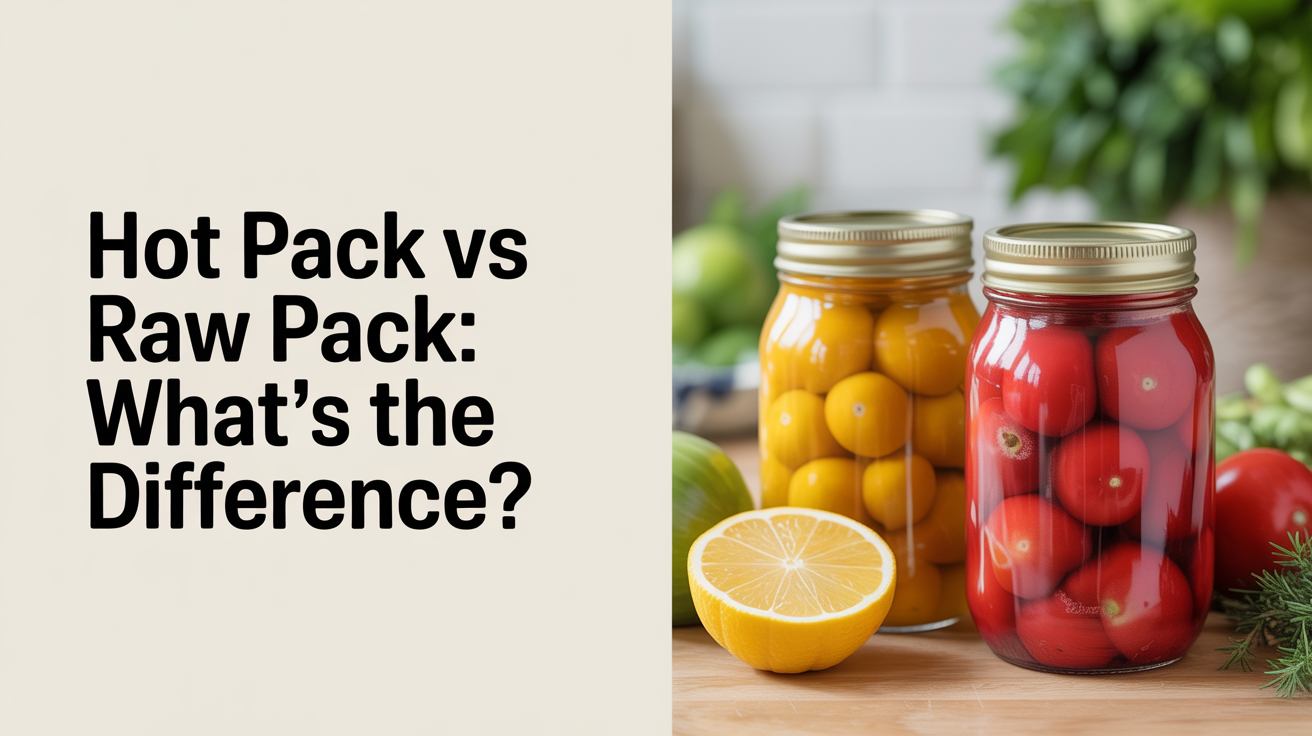
When you start reading through canning recipes, you will quickly notice that instructions sometimes tell you to heat the food before packing it into jars, and other times they say to pack it cold. These two approaches have names: hot pack and raw pack. Knowing what each one means, and understanding why tested recipes specify one over the other, helps you follow instructions accurately and get safe, good-looking results.
What Is Hot Pack Canning?
Hot pack means you partially cook or heat the food in liquid before ladling it into jars. The food goes in hot, the liquid goes in hot, and you process immediately.
Heating the food before packing does a few things. It drives out air that is trapped inside the cells of fruit, vegetables, and other produce. Less air in the jar means less floating after processing and a tighter pack, so you can often fit more food in each jar. Fewer air pockets also means less oxidation, which helps color and flavor hold up better during storage.
Hot pack is the default for many foods: peaches, pears, apples, and tomatoes all appear in hot-pack recipes. It is particularly well-suited to soft or high-moisture produce that can release liquid and shrink during processing anyway.
What Is Raw Pack Canning?
Raw pack (sometimes called cold pack) means you place the uncooked food directly into the jar, then cover it with boiling liquid before processing.
The food has not been pre-heated, so it still contains the air trapped in its cells when it went into the jar. That air gets released during processing, which is why raw-packed foods tend to float toward the top of the jar more than hot-packed foods do. The jars can also look less full after processing because the food compresses as it heats in the canner.
Raw pack works well for foods that hold their shape better without pre-cooking, or for times when you want to preserve a firmer texture. Some whole or halved fruits are commonly raw-packed, as are certain pickle recipes where starting with raw, crisp produce contributes to the final crunch.
Key Differences at a Glance
| Feature | Hot Pack | Raw Pack |
|---|---|---|
| Food state going into jar | Preheated or partially cooked | Uncooked, room temperature |
| Air in cells at pack time | Driven out by heat | Still present |
| Floating after processing | Less common | More common |
| Jar fill after processing | Stays fuller | May look less full |
| Typical texture result | Softer | Firmer |
| Common uses | Most fruits, tomatoes, many vegetables | Some whole fruits, crisp pickles |
Which Method Should You Use?
The short answer is: use whichever method your tested recipe specifies. This is not a matter of preference.
Hot pack and raw pack are not interchangeable within a given recipe because the processing time is calibrated to match the pack method. The temperature at the center of the jar when it enters the canner, the density of the pack, and the presence or absence of air all affect how heat penetrates the food during processing. A tested recipe accounts for all of these variables together.
If a recipe calls for hot pack with a 25-minute processing time, using raw pack instead and applying that same time is not safe. The cold food will take longer to reach the temperature needed throughout the jar. Swapping methods also means borrowing a processing time that was not developed for the combination you are using.
Always follow the method and the processing time as a matched pair. If you want to try a different method, look for a separate tested recipe that was developed for that approach. Good sources for tested recipes include the USDA Complete Guide via the National Center for Home Food Preservation, the Ball Blue Book, and the So Easy to Preserve guide from the University of Georgia.
For a step-by-step walkthrough of the water-bath process, see How to Water-Bath Can: A Step-by-Step Guide for Beginners.
Practical Notes for Each Method
For hot pack: Bring the food and liquid to a boil (or the temperature the recipe specifies) before packing. Work quickly so the food stays hot as you fill jars. The recipe will tell you how long to pre-cook or heat the food, and that step matters too, so do not skip it or shorten it.
For raw pack: Pack the food firmly but without crushing it, since some settling will occur during processing. Pour boiling liquid over the cold food as directed. The temperature difference can stress the jars, so make sure your jars are warm (not cold from the refrigerator) before filling, and handle them carefully.
In both cases, leave the headspace the recipe specifies, remove air bubbles by running a thin spatula or bubble remover around the inside of the jar, wipe the rims clean, and apply lids and bands correctly before lowering the jars into the canner.
Not every food is appropriate for water-bath canning regardless of pack method. Low-acid foods like plain green beans, corn, and meats require a pressure canner to reach the temperatures needed to destroy botulism spores. To understand which foods fall into which category, see What Foods Can You Water-Bath Can.
Hot Pack vs Raw Pack for Tomatoes
Tomatoes come up often in this discussion because recipes for them exist in both forms, and because tomatoes sit right at the borderline of safe acidity.
Hot-pack tomato recipes are more common because pre-cooking drives out air and helps the tomatoes settle into a denser, more stable pack. They also tend to produce cleaner-looking jars with less separation between liquid and solids.
Raw-pack tomatoes are sometimes preferred when you want firm, whole or halved tomatoes that hold their shape in the jar. Recipes exist for this, but they specify their own processing times that are longer than hot-pack times to account for the colder starting temperature.
For detailed instructions on canning tomatoes safely, including why acid must always be added regardless of pack method, see How to Can Tomatoes Safely and Why You Add Acid.
Frequently Asked Questions
Can I choose between hot pack and raw pack based on which is easier? Only if you have tested recipes for both options and use the correct processing time for whichever you choose. The methods are not interchangeable within a single recipe. If your recipe only gives instructions for one method, that is the one to use.
Why does my raw-packed fruit float after processing? Floating is normal with raw pack and is caused by the air that was still in the food cells when it went into the jar. That air gets released during processing and the food rises. It is a cosmetic issue, not a safety problem. The food is still safe to eat as long as you followed a tested recipe and got a proper seal.
Does the pack method affect how long the food lasts in storage? Both methods produce shelf-stable food when done correctly. Hot-packed foods sometimes retain color and flavor slightly better over time because less residual air is left in the jar, but both are intended for the same general storage window of about one to two years for best quality.
If my tested recipe gives me a choice between hot pack and raw pack, do I need to adjust anything? Yes. When a source like the NCHFP gives both options with separate processing times, use the time that corresponds to the method you choose. The times are listed separately for a reason. Do not mix and match.
Can I use raw pack for low-acid foods in a pressure canner? Some pressure canning recipes do call for raw pack. The same rule applies: use the processing time the tested recipe specifies for that method and that food. Low-acid foods always require a pressure canner regardless of pack method, and the dial or weighted gauge pressure specified in the recipe must be maintained for the full processing time.