How to Can Salsa Using a Tested Recipe
Learn how to can salsa safely using a tested recipe. Understand why the acid-to-vegetable ratio matters and how water-bath canning keeps salsa shelf-stable.
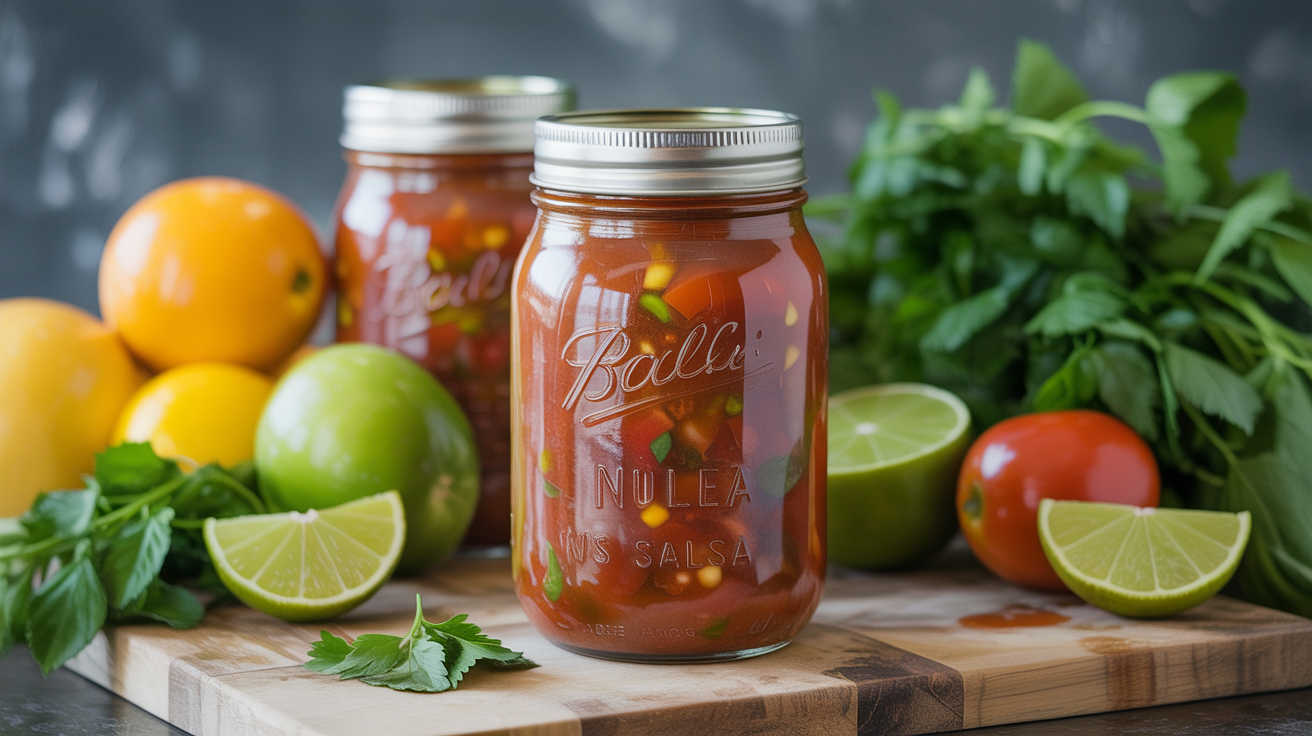
Salsa is one of the most requested items in any home canning kitchen. It is also one of the riskier ones to improvise. The problem is not tomatoes on their own. The problem is what goes into salsa alongside them: onions, peppers, garlic, and sometimes corn or other low-acid vegetables. That combination means you cannot just wing the proportions and trust the boiling-water bath to make it safe.
This guide explains why a tested recipe is non-negotiable for salsa, what to look for in a reliable one, and how to actually run the water-bath process from start to finish.
Why Salsa Requires a Tested Recipe
Tomatoes sit right at the edge of what water-bath canning can safely handle. Their natural pH hovers around 4.0 to 4.6, and the water-bath method is only appropriate for foods at pH 4.6 or below. When you add onions, peppers, and garlic, all of which are low-acid, you raise the overall pH of the mixture. Push it high enough and the boiling-water bath can no longer guarantee that dangerous bacteria are destroyed.
This is precisely why water-bath canning works well for some foods and not others. The method relies on acid as a partner in safety, not on heat alone. Salsa lands in a gray zone where ingredient proportions directly determine whether the finished product is shelf-stable and safe.
Tested recipes from the USDA, the National Center for Home Food Preservation (NCHFP), or Ball account for this. Food scientists measure the pH of the finished product, then calculate the right amount of added acid and the correct processing time to match. That calculation is specific to the exact ratios in the published recipe. Change the ratios, and the safety math no longer holds.
What "Tested Recipe" Actually Means
A tested recipe is one that has been developed and validated in a laboratory, not one that has worked out well in someone's kitchen for years without making anyone sick. The difference matters because foodborne illness from improperly canned low-acid food can be present without any visible or smell-based warning signs.
Reliable sources for tested salsa recipes include:
- USDA Complete Guide to Home Canning (available free at the NCHFP website)
- National Center for Home Food Preservation at nchfp.uga.edu
- Ball Blue Book Guide to Preserving (current edition)
- So Easy to Preserve from the University of Georgia Cooperative Extension
These sources are updated periodically as food science research evolves. If you are using an older cookbook or a recipe passed down through family, it may predate modern safety standards.
What You Cannot Change in a Salsa Recipe
Tested salsa recipes come with specific constraints. Violating them means the recipe's tested safety data no longer applies to what you made.
Do not change the acid. Most tested salsa recipes call for bottled lemon juice or white vinegar at a specific quantity. Bottled juice and commercial vinegar have standardized acidity; fresh-squeezed lemon juice does not. Do not substitute one for the other, reduce the amount, or leave it out because the recipe "seems acidic enough."
Do not increase low-acid vegetables. You can use less onion or fewer peppers than the recipe calls for. You cannot use more. Every additional tablespoon of onion or pepper lowers the overall acidity of the batch. You also cannot add ingredients that are not in the recipe, such as corn, zucchini, or extra garlic.
Do not change the tomato-to-vegetable ratio. If the recipe calls for six cups of chopped tomatoes and one cup of onion, that ratio was tested as a unit. Swapping four cups of tomatoes for an equal volume of onions to use up a surplus is not safe.
Do not reduce the processing time. The time given is calibrated for the jar size listed in the recipe. If the recipe specifies pints, do not process half-pints for the same duration and assume they are done sooner.
Equipment You Will Need
Before you start, confirm you have what the process requires. For a complete overview of the water-bath process itself, see the step-by-step beginner guide to water-bath canning.
| Item | Notes |
|---|---|
| Water-bath canner with rack | Deep enough for jars to be covered by 1 to 2 inches of water |
| Canning jars (pint or half-pint) | Mason-style jars rated for canning; no commercial pasta sauce jars |
| New lids | Flat lids should be new each time; bands can be reused if undamaged |
| Jar lifter | Keeps your hands away from boiling water |
| Wide-mouth funnel | Keeps jar rims clean and reduces spillage |
| Headspace tool or ruler | For measuring the gap between the salsa and the jar rim |
| Bottled lemon juice or vinegar | As specified in your recipe; keep it on hand before you start |
How to Can Salsa Step by Step
Once you have a tested recipe and your equipment ready, the process follows the same arc as any water-bath project.
Prepare the jars. Wash jars in hot soapy water or run them through a dishwasher. Keep them hot until you are ready to fill them. Warm jars going into a hot canner are less likely to crack from thermal shock.
Make the salsa. Follow your tested recipe exactly. Most recipes call for combining tomatoes, peppers, onions, garlic, and acid in a saucepan and simmering for a specified time. Drain excess liquid if the recipe tells you to; do not adjust proportions to compensate for a wetter or drier batch of tomatoes.
Fill the jars. Ladle hot salsa into hot jars, leaving the headspace the recipe specifies. For most tested salsa recipes, that is half an inch. Wipe jar rims with a clean damp cloth. Place new lids and finger-tighten the bands.
Process the jars. Lower filled jars into the canner, making sure water covers them by one to two inches. Bring the water to a full boil, then begin timing. Use the time given in your specific recipe for your jar size and your altitude. Salsa recipes tested at sea level are calibrated for elevations up to 1,000 feet. Above that, add extra processing time according to the altitude chart in your recipe source.
Cool and check the seals. Remove jars and set them on a towel, at least one inch apart, for 12 to 24 hours. Do not press the lids while they are cooling. After they have cooled completely, press the center of each lid. A properly sealed lid does not flex. Any lid that gives or that did not seal should go into the refrigerator and be used within a few days.
Tomatoes in particular benefit from added acid during this process, which is covered in more detail at how to can tomatoes safely and why you add acid.
Storing and Serving Your Canned Salsa
Label each jar with the recipe name and the date. Store sealed jars in a cool, dark place away from temperature fluctuations. Most home-canned salsa is at its best quality within 12 to 18 months, though it remains safe past that point if the seal holds.
Before opening, inspect each jar. Do not use a jar if the lid bulges, if the seal has given way during storage, if the contents spurt out when opened, or if anything smells off after opening. When in doubt, throw it out.
Frequently Asked Questions
Can I use any salsa recipe I find online? Only if the source is one of the established tested authorities: USDA, NCHFP, Ball, or a university cooperative extension. A recipe from a food blog, social media, or a community cookbook has likely not been laboratory-tested for pH and processing time. The appearance of canning instructions in a recipe does not mean those instructions have been validated for safety.
Is homemade salsa safe to can at home? Yes, provided you use a tested recipe without altering proportions or ingredients, use the correct amount of added acid, and process jars for the time and method specified. The safety of home-canned salsa depends entirely on following the recipe as written.
What happens if I add extra peppers or onions? Adding more low-acid ingredients raises the pH of the finished salsa. The tested processing time may no longer be sufficient to make it safe. The extra vegetables also increase the density of the mixture, which affects heat penetration during processing. The risk is not theoretical. Use the proportions as written or store your salsa in the refrigerator instead.
Can I use fresh lemon juice instead of bottled? No. Bottled lemon juice has a standardized acidity that food scientists use when developing tested recipes. Fresh lemon juice varies in acidity depending on the fruit, so the acid contribution to the jar cannot be reliably predicted. Always use bottled lemon juice or the vinegar type and concentration specified in your recipe.
Do I need to peel the tomatoes for salsa? Most tested salsa recipes specify peeled tomatoes. Peeling removes the skins, which can become tough and papery after processing. Blanching tomatoes briefly in boiling water and then transferring them to an ice bath makes the skins slip off easily. If your tested recipe calls for peeled tomatoes, peel them.