Do You Need a Pressure Canner? Pressure Canner vs Pressure Cooker
Find out if you need a pressure canner, how it differs from a pressure cooker, and when a water-bath canner is enough for safe home preserving.
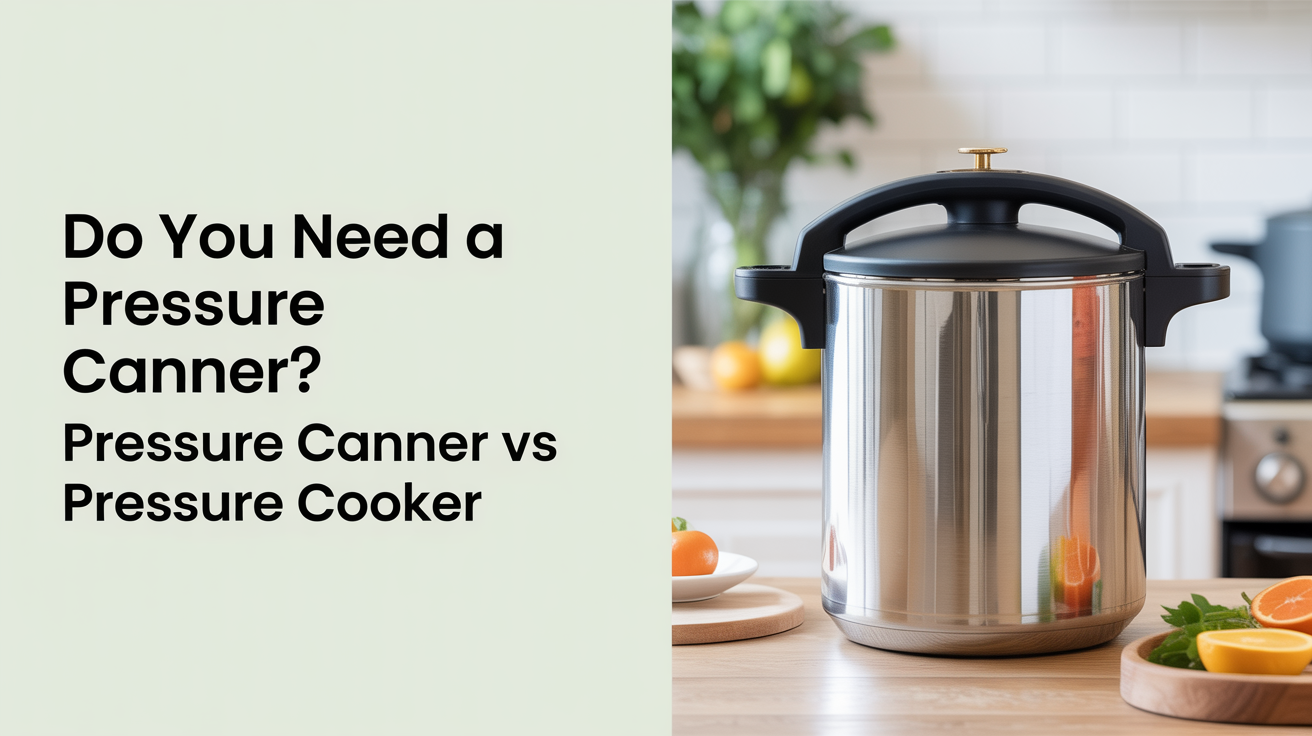
Whether you actually need a pressure canner depends on one thing: what you plan to put in the jar. If you're making strawberry jam or dill pickles, you don't need one at all. If you want to can green beans, chicken soup, or black beans, a pressure canner isn't optional. It's the only equipment that can do the job safely.
Here's what you need to know before you buy anything (or decide not to).
High-Acid vs Low-Acid: The Decision That Drives Everything
Home canning splits cleanly into two categories based on the acidity of the food.
High-acid foods (water-bath territory)
Fruits, jams, jellies, pickles, and properly acidified tomatoes all fall into the high-acid category. The natural or added acid in these foods creates an environment where the bacteria that cause serious illness can't thrive. A boiling-water bath keeps jars submerged in water at 212°F, which is high enough to destroy molds, yeasts, and the microorganisms present in acidic foods.
If your entire canning list consists of jams, marmalades, fruit butters, pickled vegetables, and salsa made with a tested recipe, a water-bath canner is all you need. A large stockpot with a rack works fine. You can find more on the basic setup in this guide to canning equipment for beginners.
Low-acid foods (pressure canner required)
Vegetables, dried beans, meats, poultry, fish, and broth-based soups are low-acid foods. Without the protective barrier of acid, these foods can harbor Clostridium botulinum spores, which survive boiling temperatures and can produce a dangerous toxin in the sealed, oxygen-free environment of a canning jar.
Destroying those spores requires sustained heat above 240°F, a temperature that boiling water simply cannot reach. A pressure canner builds pressure inside a sealed pot, which raises the boiling point of water to 240°F and above. Only there, and only with the correct processing time for each food and jar size, is low-acid food considered safe to store at room temperature.
There is no shortcut for this. Low-acid foods processed in a water-bath canner or any equipment that can't reach and hold that temperature are not safe, regardless of how long they sit in the pot.
What a Pressure Canner Actually Is
A pressure canner is a heavy-gauge pot, usually holding 16 to 23 quarts, with a locking lid, a rubber gasket, a pressure-relief vent, and either a dial gauge, a weighted gauge, or both. It's designed to hold one or two layers of filled canning jars and to maintain a precise, verified pressure for extended periods.
Dial gauge vs weighted gauge
Dial gauge canners have a numbered gauge on the lid that shows the exact pressure in pounds per square inch (PSI). They're accurate when new, but the gauge needs to be tested for accuracy at your local cooperative extension office once a year. If it reads off by more than 2 PSI, you adjust your target pressure accordingly (or replace the gauge). At high altitudes, you'll increase pressure to compensate for the lower atmospheric pressure.
Weighted gauge canners use a metal weight (typically with settings for 5, 10, and 15 PSI) that rocks or jiggles when pressure is correct. They don't require annual testing, and they self-regulate pressure as long as you maintain a steady heat. Altitude adjustments are made by switching to the 15-pound weight rather than recalibrating a gauge reading.
Neither type is inherently better. Weighted gauge models require less upkeep; dial gauge models give you a precise visual readout. Both work well when used correctly.
Pressure Canner vs Pressure Cooker: Not the Same Thing
This is probably the most common confusion new canners run into. The names sound similar, and both use pressurized steam. But they serve different purposes and are not interchangeable for canning low-acid foods.
| Feature | Pressure Canner | Stovetop Pressure Cooker |
|---|---|---|
| Capacity | 16–23+ quarts; holds multiple canning jars | Typically 4–8 quarts; not designed for jars |
| Pressure regulation | Dial or weighted gauge, tested and verified | Pressure indicator, not independently calibrated |
| Tested for canning? | Yes, by USDA and manufacturers | Generally no |
| Approved for low-acid canning? | Yes | Only if specifically tested and approved |
| Safe for water-bath-only foods? | Yes (you can water-bath in a pressure canner) | Sometimes, but check manufacturer guidance |
A standard stovetop pressure cooker is built for cooking food fast. It hasn't been validated to hold precise canning temperatures and pressures over the processing times required by tested recipes. The walls may be thinner, the pressure regulation less reliable, and the internal volume too small for the heat distribution that safe pressure canning requires.
The USDA recommends using only pressure canners specifically designed and labeled for canning.
Can You Use an Instant Pot or Electric Multicooker?
This question comes up constantly, and the answer matters.
Most electric multicookers, including popular models of Instant Pot, are not approved for pressure canning low-acid foods. The National Center for Home Food Preservation (NCHFP) and USDA have been explicit about this. The primary concern is that electric multicookers can't be independently verified to reach and maintain the precise temperatures and pressures that tested canning recipes require. Altitude compensation is also difficult to confirm on most models.
Some manufacturers have released electric appliances marketed specifically as "electric canners" or "electric pressure canners." A small number of these have undergone independent testing. Before relying on any electric appliance for pressure canning, check whether a credible third-party authority (such as the NCHFP or a university extension program) has validated that specific model for canning. If you can't find that confirmation, don't use it for low-acid foods.
This isn't about being overly cautious. Botulism toxin is odorless and tasteless. You cannot tell by looking at or smelling a jar whether it's safe. The processing method is the only protection.
Do You Actually Need One?
Ask yourself what you want to preserve, then use this as your guide.
You do NOT need a pressure canner if you plan to make:
- Jams, jellies, marmalades, fruit butters
- Fruit (peaches, pears, cherries, applesauce)
- Pickles, relishes, chutneys
- Salsa and tomato sauces (using a tested, acidified recipe)
- Juice and lemonade concentrates
A boiling-water canner handles all of these. Start there if that's your focus. It's less expensive, takes up less space, and covers a wide range of popular projects.
You DO need a pressure canner if you want to can:
- Plain vegetables (green beans, corn, carrots, beets without added acid)
- Dried beans and legumes
- Meats, poultry, or fish
- Soups, stews, and broths
- Mixed recipes containing low-acid ingredients
If even one item on your list falls into this category, a pressure canner is necessary.
Many canners start with high-acid foods and add a pressure canner once they're ready to expand. That's a practical approach. The two methods complement each other. You can use a pressure canner for water-bath projects too, so it doesn't replace anything.
Pressure canners are a meaningful investment. Expect to spend more than you would on a basic water-bath setup. They're also built to last for decades with proper care, so most people who use one regularly find it worthwhile over time. See guidance on choosing the right jar size before your first pressure canning session, since headspace and jar capacity interact with processing times.
Using Your Pressure Canner Safely
A few principles apply every time, regardless of the food.
Always start with a tested recipe from a trusted source. The USDA Complete Guide to Home Canning and the National Center for Home Food Preservation (nchfp.uga.edu) publish research-based processing times and pressures for specific foods, jar sizes, and altitudes. Ball also publishes tested recipes. Do not adjust processing times or pressures from tested recipes, and do not assume that processing something longer makes it safer. The recipes are calibrated for specific outcomes.
Let the canner vent steam for the recommended time before adding the weight or closing the petcock. Rushing this step means air may remain in the canner, which affects temperature and processing accuracy.
Never force-cool a pressure canner by running cold water over it. Let pressure drop on its own. Opening a canner while pressure remains inside is dangerous.
After processing, check every lid seal once jars are fully cool. A lid that flexes or pops when pressed has not sealed properly. Refrigerate and use those jars promptly rather than storing them on the shelf. You can read more about why lids behave this way in the guide to canning lids and bands.
If you ever open a jar and notice an off odor, unusual color, spurting liquid, or a lid that wasn't sealed, do not taste it. Dispose of it carefully according to current food safety guidance.
FAQ
Can I use a regular large stockpot as a pressure canner?
No. A stockpot is open to atmosphere and can only reach 212°F at sea level. It can function as a water-bath canner for high-acid foods, but it cannot create or hold pressure. It is not safe for low-acid foods.
Is a pressure canner the same as a pressure cooker?
They look similar, but no. A pressure cooker is designed for fast meal prep, not for canning. It typically holds less liquid, lacks independently calibrated pressure gauges, and hasn't been tested for the sustained pressure levels and processing times that safe pressure canning requires. Most pressure cookers are not approved for canning low-acid foods.
My electric Instant Pot has a canning button. Can I use it?
Check the specific model against current guidance from the NCHFP or your state's cooperative extension office. Most standard Instant Pot models have not been validated for pressure canning low-acid foods, even those with a "canning" setting. A few manufacturers have had specific electric models independently tested. Confirm yours is one of them before using it for vegetables, beans, or meats.
What size pressure canner should a beginner buy?
For most home canners, a canner in the 16-to-23-quart range handles standard-width quart and pint jars. Smaller models exist but may limit batch sizes. Check whether the model fits on your stove burners. Some larger canners are too wide for standard residential burners, and flat-top glass stoves have their own manufacturer weight restrictions. Consult your stove manual before purchasing.
Do I need special jars or lids for pressure canning?
Standard canning jars rated for home use work for pressure canning. Use lids and bands specifically made for canning, not repurposed commercial food jars with their one-use lids. Always inspect jars for chips or cracks before each use, and use new flat lids each time. Bands can be reused as long as they're in good condition and free of rust.