Mason Jar Sizes Explained (and When to Use Each)
Learn which mason jar size to use for canning jams, pickles, tomatoes, and more — plus why matching jar size to your tested recipe is a food-safety essential.
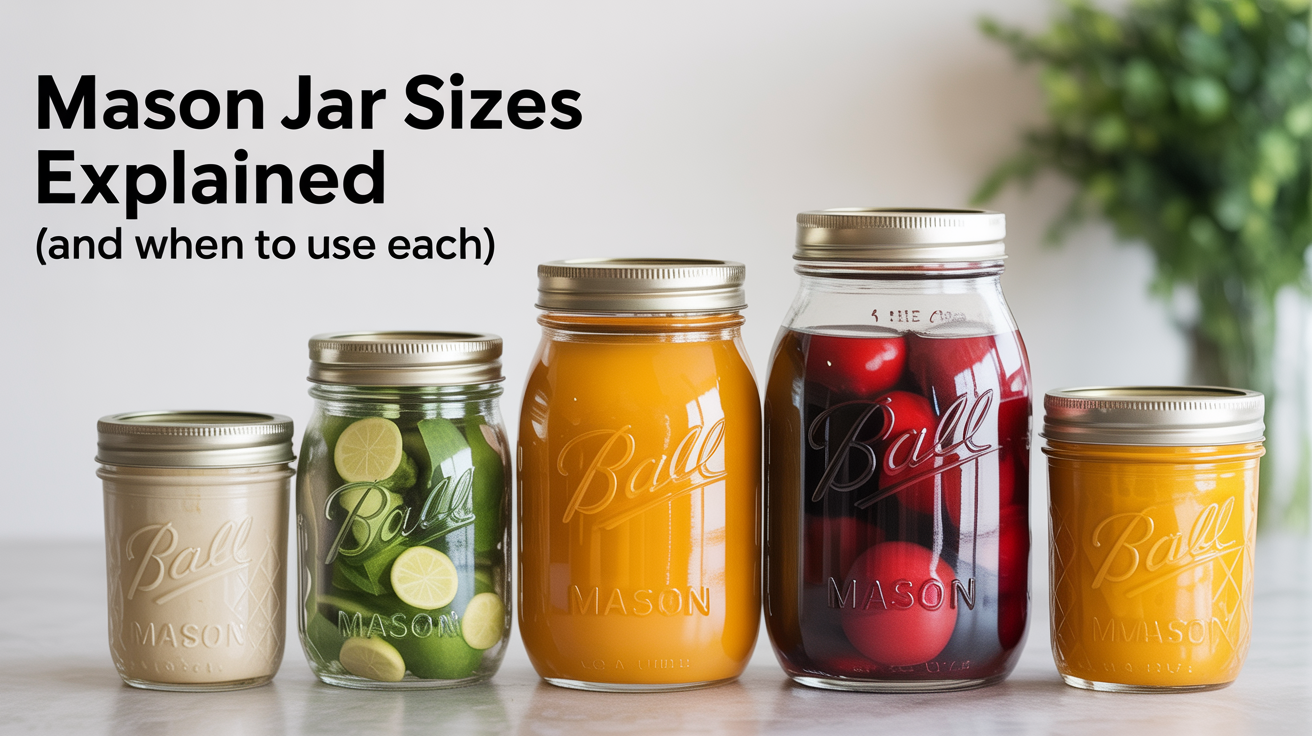
Walk into any kitchen store and you'll see shelves of mason jars in a dizzying range of sizes. For someone new to canning, picking the right one can feel like a guessing game. But jar size is more than a matter of preference, it directly affects food safety, because processing times in tested recipes are calibrated for a specific jar size. Getting familiar with the options before you start canning makes the whole process smoother and keeps your pantry safe.
Why Jar Size Actually Matters for Food Safety
This is the part that surprises most beginners. When a recipe from the USDA Complete Guide to Home Canning or the National Center for Home Food Preservation (NCHFP) says "process pint jars for 10 minutes," that time was determined in a lab using pint jars. Heat has to penetrate all the way to the center of the food, and a quart jar holds twice the volume, so it takes longer for the core to reach a safe temperature.
If you swap a pint for a quart and use the same processing time, the food at the center of that quart may not get hot enough to destroy harmful bacteria. For low-acid foods, vegetables, meats, beans, that's a serious risk, because improperly processed low-acid foods can harbor Clostridium botulinum, the organism responsible for botulism.
The rule: use the jar size your tested recipe specifies. If a recipe gives times for both pints and quarts, you can choose between those two. If it only lists one size, that is the size you use. When in doubt, check a tested source like the USDA, NCHFP, or the current Ball Blue Book.
Headspace Changes by Jar Size and Food Type
Headspace, the gap between the food and the lid, also varies by recipe, not by jar size alone. Jams typically need 1/4 inch. Tomatoes and most fruit get 1/2 inch. Low-acid vegetables processed in a pressure canner usually need 1 inch. Always follow the headspace your recipe specifies, regardless of which jar size you're using.
The Complete Breakdown of Canning Jar Sizes
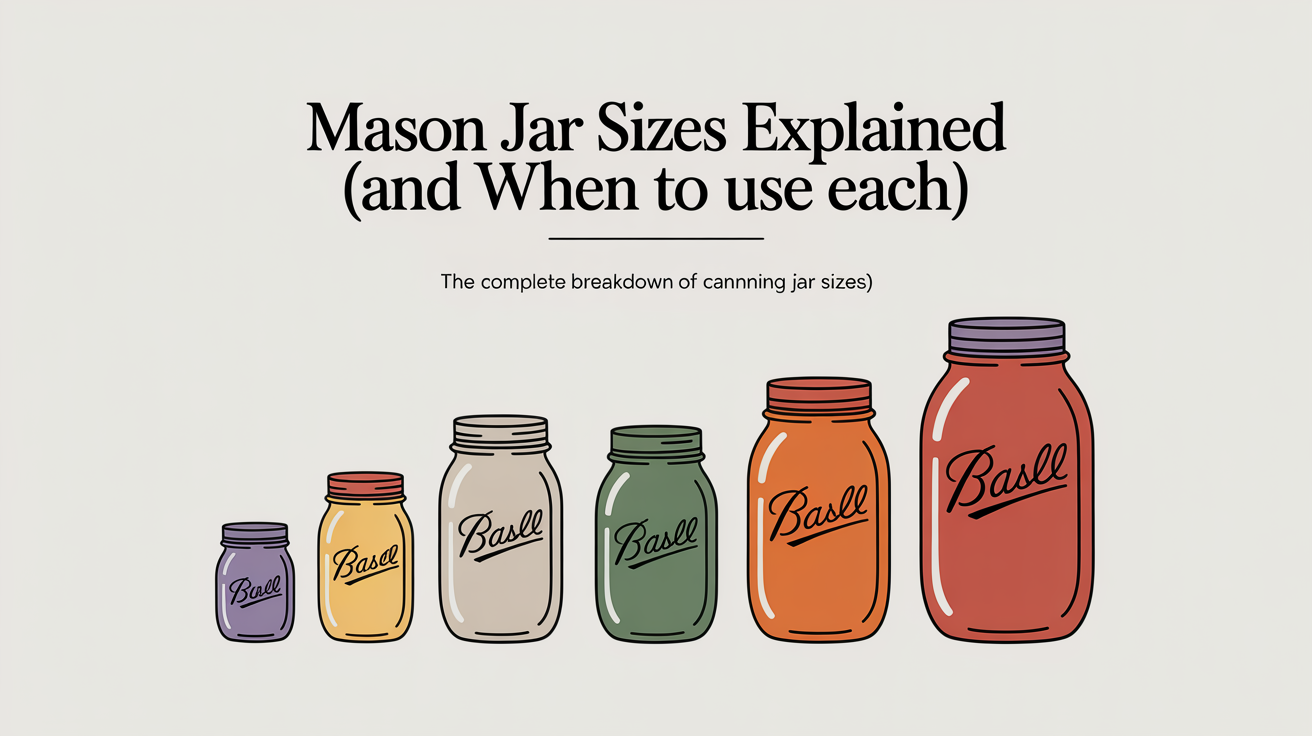
Here is a practical overview of every standard canning jar size, what it's typically used for, and the mouth opening that fits each one.
| Size | Volume | Common Uses | Mouth Type |
|---|---|---|---|
| Quarter-pint | 4 oz | Jam samplers, gift jars, single-serving condiments | Regular |
| Half-pint | 8 oz | Jams, jellies, preserves, hot sauce | Regular or Wide |
| Pint | 16 oz | Pickles, salsa, diced tomatoes, sauces, single-serving fruit | Regular or Wide |
| Pint-and-a-half | 24 oz | Asparagus spears, long pickles, specialty recipes | Wide |
| Quart | 32 oz | Whole tomatoes, sliced fruit, green beans, large-batch low-acid | Regular or Wide |
| Half-gallon | 64 oz | Apple juice, grape juice only (very limited approved uses) | Wide |
Quarter-Pint (4 oz): The Sampler Jar
These tiny jars are a favorite for gifting. A small batch of strawberry jam fills a dozen quarter-pints easily, and they make cheerful hostess gifts. Processing times are sometimes listed alongside half-pint times in tested recipes, check your source to confirm. Never assume you can use the half-pint time and call it close enough, even for a jar this small.
Half-Pint (8 oz): The Jam Standard
If there is one jar size that belongs in every canning kitchen, it's the half-pint. Almost every jam, jelly, and preserve recipe is written for this size. A season's worth of blueberry jam fits in a manageable amount of jars, and an 8-ounce jar is the right size to move through in a week or two after opening, which matters for safety once the seal is broken and the jar is in the refrigerator.
Pint (16 oz): The All-Purpose Workhorse
Pints are the most versatile size in home canning. They're the go-to for pickles, salsa, tomato sauce, apple butter, and many vegetable recipes. A pint of crushed tomatoes is enough for a pot of pasta. A pint of dill pickles fits neatly in the fridge door. Most beginners find pints easier to work through than quarts, which can sit open in the fridge longer than ideal.
Many recipes offer processing times for both pints and quarts. If you're canning for one or two people, pints are often the better practical choice, even when quarts are permitted.
Pint-and-a-Half (24 oz): The Specialty Jar
This size isn't found in every recipe index, but it exists specifically for tall, slender produce like asparagus spears or long pickle spears that don't fit neatly in a pint. If a recipe lists pint-and-a-half jars, great, use them. Otherwise, there's no need to seek them out.
Quart (32 oz): For Large-Batch, Low-Acid Foods
Quarts shine when you're canning a lot of tomatoes, a big haul of green beans, or a bushel of peaches. Because quart jars require longer processing times, you'll want to confirm those times specifically in your tested recipe. Some recipes that work in pints don't include quart times at all, in that case, you simply can't use a quart jar safely for that recipe.
For pressure-canned low-acid foods, always use the pressure canner. See our overview at Do You Need a Pressure Canner? for more on choosing the right canning method.
Half-Gallon (64 oz): Very Limited Use
The half-gallon is a specialty item with an extremely short approved-use list. The USDA and NCHFP currently recognize it only for canning apple juice and grape juice. That's it. Despite what you might see online, half-gallon jars are not approved for tomatoes, pickles, or any other foods, the processing times needed to safely heat-penetrate that volume of denser food have not been established in testing.
Regular Mouth vs. Wide Mouth: Which Should You Buy?
Jars come in two opening sizes: regular mouth (about 2-3/8 inches across) and wide mouth (about 3 inches across). Both seal equally well. The difference comes down to what you're putting inside and how you want to get it back out.
Regular mouth jars cost slightly less and work well for pourable or chunky foods, jams, jellies, sauces, diced vegetables. Wide mouth jars make it much easier to pack whole or halved fruit, large pickle spears, or anything where you need to arrange pieces neatly. They're also easier to clean by hand if you wash them before reusing.
Your recipe might specify one mouth type, particularly for pint-and-a-half or half-gallon sizes, which are only made in wide mouth. For most other sizes, either will work, choose based on what's convenient for your food.
What You Should Never Use for Canning
Not every glass jar is a canning jar. Commercial mayo jars, pasta sauce jars, pickle jars from the grocery store, these jars were manufactured for one-time commercial use under industrial conditions. Their glass is thinner and not designed to handle the thermal stress of repeated canning. Their lids don't have the sealing compound needed for a reliable home-canning seal.
Before you can anything, inspect each jar carefully. Run your finger around the rim and look for chips, nicks, or cracks, especially around the sealing surface at the top. A damaged rim will not seal properly, and a cracked jar can break in the canner. Any jar with visible damage goes in the recycling bin, not the canning shelf. More on how to set up your workspace can be found at Canning Equipment for Beginners.
Also review the condition of your lids. Flat lids are single-use, the sealing compound compresses during processing and won't create a reliable seal a second time. Bands (the screw rings) can be reused as long as they're free of rust and deformation. For a full breakdown, see our guide at Canning Lids and Bands: Why You Replace Lids Every Time.
Stocking Your Jar Collection as a Beginner
You don't need every size on day one. A reasonable starter collection might look like this: a case of half-pints (12 jars) for jams and preserves, a case of regular-mouth pints (12 jars) for pickles and salsa, and a case of wide-mouth quarts (12 jars) for tomatoes and fruit. That covers the foods most beginners start with, without requiring a big upfront investment.
Buy quality canning jars, not repurposed commercial jars. They're designed to handle repeated heating and cooling cycles, and they're made to an exact rim diameter so the two-piece lids seal properly. Jars that are well cared for can last many years, just inspect them every season before you use them.
FAQ
Can I use a quart jar if my recipe only lists pint times?
No. Processing times are established for specific jar sizes. If your tested recipe only gives times for pints, you need to use pint jars. Using a quart jar with pint processing times means the food at the center of the larger jar may not reach a safe temperature. Always follow the jar size your recipe specifies, and use a source like the USDA Complete Guide or NCHFP.
Do I need to buy wide-mouth jars, or will regular-mouth work?
It depends on what you're canning. Regular-mouth jars work well for jams, sauces, and most liquid or chunky foods. Wide-mouth jars are easier to pack with whole fruit, pickle spears, or larger pieces. Either mouth type seals equally well, the choice is about convenience and what fits your food. Some jar sizes (pint-and-a-half, half-gallon) only come in wide mouth, so if a recipe calls for those, you don't have a choice.
Can I reuse the glass jars that came with store-bought pickles or pasta sauce?
No. Commercial food jars are not made to the same specifications as canning jars. They have thinner glass and a different rim design that won't form a reliable seal with standard two-piece canning lids. They're also more likely to break under the temperature swings of canning. Stick to jars specifically manufactured for home canning.
Why do some recipes list times for both pints and quarts, but others only list one size?
When researchers test a recipe, they test specific jar sizes and establish safe processing times for those sizes. If a recipe was only tested for pints, no established processing time exists for quarts, and there's no safe way to estimate one at home. Recipes that offer both pint and quart times have been tested at both sizes. If only one size is listed, that's the only size with a verified safe processing time for that recipe.
How many jars do I need to start?
A case (12 jars) each of half-pints, pints, and quarts gives you a versatile starting set. You don't need every size before your first canning session. Start with whatever size your chosen recipe requires, and expand from there as you try more recipes. Jars are a long-term investment, with proper care, a set of quality canning jars can last a decade or more.