How to Make and Can Relish and Chutney
Learn how to safely water-bath can relish and chutney using tested recipes, the right vinegar ratio, and proper processing times.
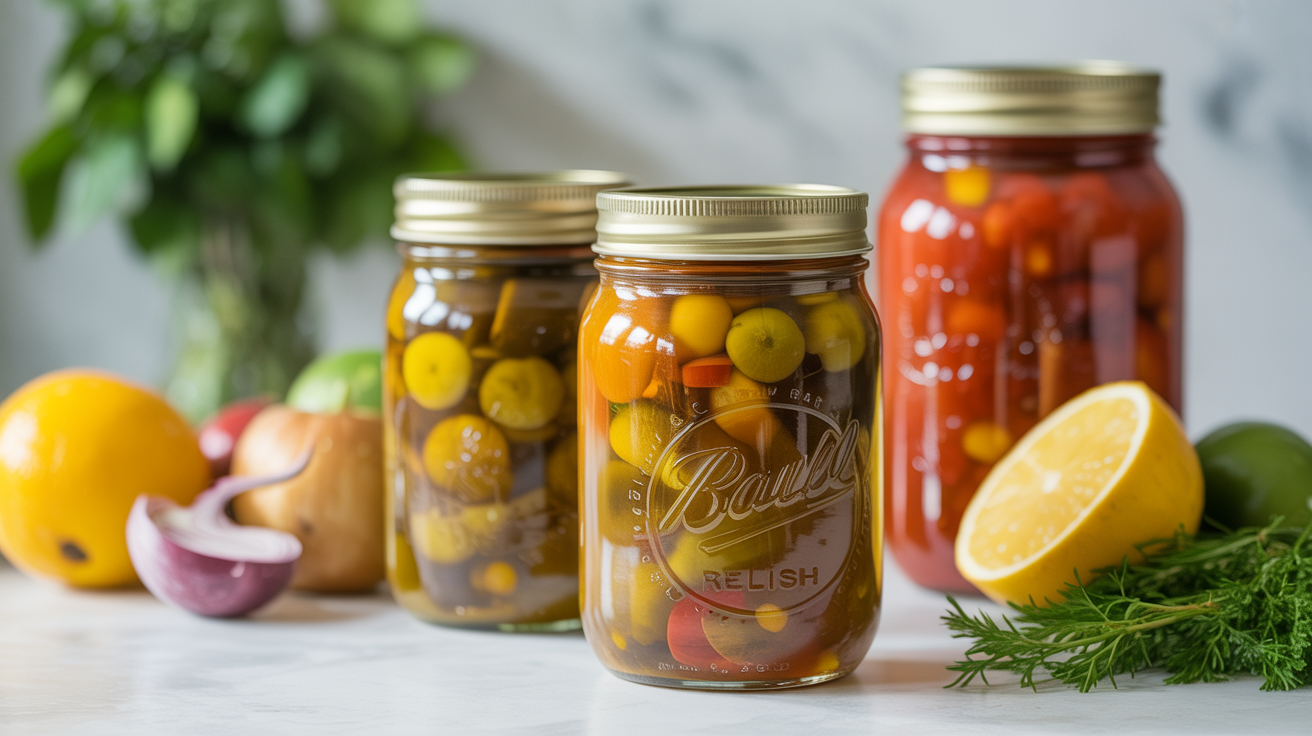
Relish and chutney belong to the same broad family as pickles: vinegar-based preserves that draw their shelf-stability from acidity rather than from sugar or salt alone. That shared foundation means both can be processed in a water-bath canner, provided you start with a tested recipe and keep the vinegar content intact. Skip either of those conditions and you lose the safety margin the recipe was built around.
Why Acidity Is the Safety Anchor
Water-bath canning is approved for high-acid foods because the boiling-water environment (212°F at sea level) is hot enough to destroy spoilage organisms when the food's pH sits at 4.6 or below. Relish and chutney achieve that low pH through vinegar, not through the natural acidity of the fruit or vegetables.
This has a practical consequence: the vinegar amount in a tested canning relish recipe is a safety measurement, not a preference. Reducing it to tone down tartness, substituting a weaker vinegar, or stirring in extra low-acid ingredients (onion, bell pepper, zucchini) tips the pH upward and may push the finished product out of the safe zone for water-bath processing. Always use the vinegar variety and quantity the recipe specifies, measured precisely.
For the same reason, never use a relish or chutney recipe sourced from a general cookbook or a food blog unless it has been laboratory-tested and carries explicit processing guidance. Reliable sources include the USDA Complete Guide to Home Canning, the National Center for Home Food Preservation (NCHFP), and the Ball Blue Book.
What Goes Into Relish vs. Chutney
The two preserves share a vinegar base but differ in character.
Relish is typically finely chopped raw vegetables (cucumber, corn, green tomato, zucchini) or fruit cooked briefly with vinegar, sugar, and spices. The texture stays a bit chunky and the flavor is bright and sharp. Classic examples include sweet pickle relish, corn relish, and green tomato relish.
Chutney leans on longer cooking, a higher ratio of fruit, and a more complex spice blend that often includes dried fruit, warm spices like ginger and cinnamon, and sometimes hot pepper. Mango chutney and apple chutney are the most common home-canning versions. The longer cook time concentrates the mixture and deepens the flavor, but it does not change the underlying safety rule: the vinegar content in the tested recipe must remain unchanged.
Preparing the Vegetables or Fruit
Most canning relish recipes call for salting and draining the chopped vegetables before cooking. This step draws out excess moisture so the finished relish holds its texture rather than turning watery in the jar.
The general process:
- Chop the vegetables or fruit to the size the recipe specifies. Uniformity matters for even cooking and consistent texture.
- If the recipe calls for salting, toss the chopped produce with pickling salt, spread it in a colander, and let it drain for the time indicated (often 1 to 3 hours or overnight). Rinse thoroughly and press out as much liquid as you can.
- Combine the drained produce with vinegar, sugar, and spices in a wide, heavy-bottomed pot. Use a non-reactive pan (stainless steel or enamel-coated) because aluminum reacts with acidic mixtures.
Chutney skips the salting step but follows the same basic framework: combine, then cook.
Cooking and Filling Jars
Bring the mixture to a boil over medium-high heat, then reduce to a steady simmer. Cook until the relish or chutney thickens to roughly the consistency described in your recipe. Stir often, especially toward the end, because the sugar makes the bottom of the pot prone to scorching.
While the mixture cooks, prepare your equipment:
- Wash jars in hot soapy water or run them through the dishwasher on a hot cycle. Keep them hot until filling.
- Place lids in hot (not boiling) water to soften the sealing compound.
- Fill the canner with enough water to cover the jars by at least one inch, and bring it to a simmer.
Ladle the hot relish or chutney into hot jars, leaving the headspace the recipe specifies (usually 1/2 inch for these preserves). Remove air bubbles by sliding a thin spatula around the inside of each jar. Wipe the rims clean, apply lids and bands to fingertip-tightness, and lower the jars into the canner.
Processing and Cooling
Once the water returns to a full boil, start timing. Processing times vary by recipe, jar size, and your altitude above sea level. Always follow the time in your tested recipe, adjusted for altitude if you live above 1,000 feet.
| Altitude | Adjustment |
|---|---|
| 0 to 1,000 ft | Use time as printed |
| 1,001 to 3,000 ft | Add 5 minutes |
| 3,001 to 6,000 ft | Add 10 minutes |
| Above 6,000 ft | Add 15 minutes |
When processing is complete, turn off the heat, remove the lid, and let the canner sit for 5 minutes before lifting the jars. Set jars upright on a towel and leave them undisturbed for 12 to 24 hours. You should hear the lids pop as they seal during cooling.
After 24 hours, press the center of each lid. A sealed lid stays depressed. Any lid that flexes up and down did not seal; refrigerate that jar and use it within a few weeks.
Label sealed jars with the contents and date. Store them in a cool, dark place for up to one year for best quality.
Frequently Asked Questions
Can I use apple cider vinegar instead of white vinegar in a relish recipe? Only if the tested recipe specifically calls for it. Vinegar type affects both flavor and, in some cases, color, but the key variable is acidity: both white distilled vinegar and apple cider vinegar are typically 5% acidity, so one can substitute for the other in recipes that call for 5% vinegar. Do not use homemade vinegar or any vinegar with unknown acidity, because you cannot verify that it meets the minimum required.
My chutney looks thicker than the recipe described. Is that a problem? Overcooking can thicken chutney enough to create dense air pockets that resist heat penetration during processing. If yours is noticeably thicker than what the recipe describes, contact the source (such as the NCHFP) for guidance rather than processing it and hoping for the best.
Do I need to pressure can relish or chutney? No, provided the recipe is a tested one designed for water-bath canning. The vinegar brings the pH well below the 4.6 cutoff, which puts it in water-bath territory. Plain vegetables without vinegar would require pressure canning, but that category is separate from relish and chutney.
Can I cut the sugar to make a lower-sugar version? In jam and jelly, sugar affects both texture and sometimes safety. In relish and chutney, sugar is primarily a flavor ingredient, not a preservative, so small reductions are less critical than vinegar reductions. That said, sugar also affects the final texture and cook time, and tested recipes are calibrated as written. If you want a less-sweet version, look for a recipe that was developed and tested with reduced sugar rather than modifying one that was not.
What should I do if a jar smells off when I open it? Discard it without tasting. Any unusual odor, bubbling at opening, or mold growth is a sign of spoilage. The "when in doubt, throw it out" rule applies here without exception.
Relish and chutney are a natural next step once you have a few batches of jam under your belt. The core skills carry over directly. For more on the jam-making side of this category, see how to make and can jam: a beginner's guide, and if pectin questions come up as you branch into fruit-based chutneys, how pectin works: getting your jam to set has a clear breakdown. Not sure where relish falls on the spectrum of preserved foods? Jam vs. jelly vs. preserves: what's the difference sorts out the terminology.