Jam vs Jelly vs Preserves: What's the Difference?
Learn the real differences between jam, jelly, and preserves — plus marmalade, conserves, and fruit butter — so you can choose and make the right spread.
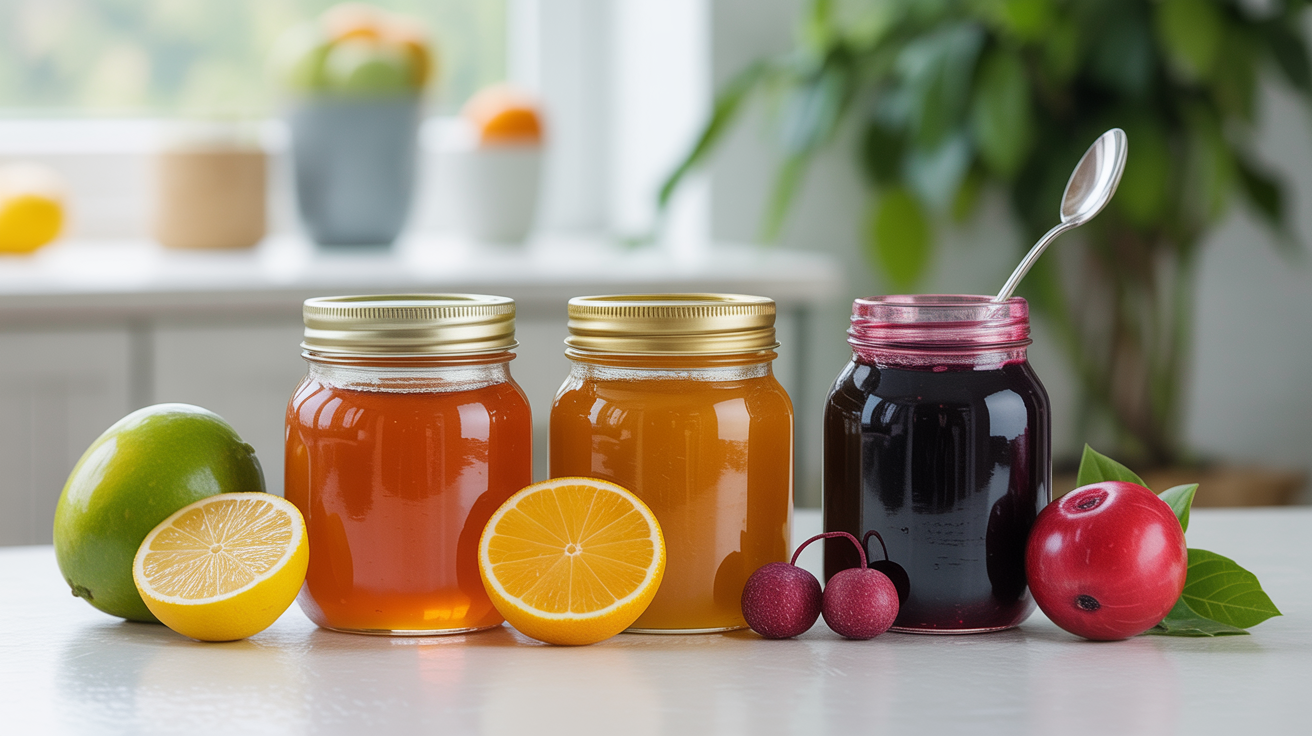
Walk into any farmers market and you will see jars labeled jam, jelly, preserves, marmalade, conserves, and fruit butter, sometimes all from the same producer. The names are not just marketing choices. Each word describes a specific texture, fruit form, and set. Once you understand what separates them, choosing the right recipe for your fruit becomes much easier, and making sense of canning instructions clicks into place.
All of these canned spreads are high-acid products, which means they are water-bath processed using a tested recipe from a trusted source such as the USDA Complete Guide to Home Canning, the National Center for Home Food Preservation (NCHFP), or a current Ball canning book. Processing times, headspace, and jar size matter, so always follow the specific recipe rather than guessing.
The Big Three: Jam, Jelly, and Preserves
These three appear on labels most often, and they differ mainly in how much of the original fruit you can see and feel in the finished jar.
Jam
Jam is made from crushed or finely chopped fruit cooked with sugar (and often added pectin) until the mixture reaches a spreadable, soft set. The fruit is in the jar, just broken down. You will see small pieces, seeds in berry jams, and a generally opaque, scoopable texture. Strawberry jam, blueberry jam, and peach jam are everyday examples.
Because fruit solids are included, jam tends to be fuller-bodied and more intensely fruity than jelly. It is also forgiving to make: you do not need to strain anything, and a wide range of fruits work well. If you are new to fruit spreads, jam is usually the best starting point. For a full walkthrough of the process, see our guide on how to make and can jam.
Jelly
Jelly starts with juice only. The fruit is cooked and then strained through a jelly bag or several layers of cheesecloth, leaving behind all solids. The resulting liquid is cooked with sugar and pectin until it sets firm enough to hold its shape when you turn it out of the jar. A good jelly is clear, almost translucent, and it jiggles rather than spreads loosely.
The clarity is both the goal and the challenge. Squeezing the jelly bag speeds things up but clouds the juice; patience pays off here. Grape jelly, apple jelly, and crabapple jelly are classics. Because jelly relies entirely on extracted juice, you do need more fruit by weight to get a reasonable yield.
Preserves
Preserves keep the fruit as whole or large pieces suspended in a thick syrup or light gel. Think of whole strawberries or large fig halves sitting in a glossy, lightly set medium. The syrup is sweet and the fruit retains some of its original shape and texture.
The word "preserves" is sometimes used loosely to mean any canned fruit product, which adds to the confusion. In a technical sense, though, preserves specifically refers to this whole-or-large-piece style. They look beautiful in the jar and on a cheese board.
Other Spreads Worth Knowing
Beyond the big three, several other products show up in canning books and are worth understanding before you dive in.
Marmalade
Marmalade is made from citrus fruit (most often oranges, lemons, grapefruits, or a combination) and it includes shreds or pieces of the peel. The peel gives marmalade its distinctive bittersweet edge and chewy bits. The set is firm, similar to jelly, but the suspended peel makes it opaque and textured. Seville orange marmalade is the traditional British benchmark, though sweet orange and lemon marmalades are common too.
Because the peel requires extra preparation, including blanching and slicing, marmalade takes more time than most jams. The results are worth it for citrus lovers.
Conserves
Conserves are a richer, more complex jam variation. They typically combine two or more fruits with sugar, and they often include nuts, raisins, or dried fruit stirred in near the end of cooking. Plum-walnut conserve and cranberry-orange-raisin conserve are common examples. The texture is chunky and the flavor layered. Because nuts and dried fruit can affect density and water activity, always follow a tested conserve recipe rather than adapting a plain jam formula.
Fruit Butter
Fruit butter is smooth, cooked-down fruit puree made with sugar and spices. Common versions use apples, pears, peaches, or plums. No added pectin is needed because the long, slow cooking concentrates the fruit enough to create a spreadable consistency on its own. Apple butter is the most familiar version. The result is silky and dense rather than gel-like, which is where the "butter" name comes from.
Fruit butters require stirring and patience: the mixture can scorch if the heat is too high. Many canners use a slow cooker or low oven for the long cooking stage. Tested recipes specify jar size and processing time carefully because the thick texture affects heat penetration.
Compote
Compote is fruit cooked briefly in a sugar syrup, sometimes with spices or a splash of wine. It is soft and saucy, and it is usually served fresh rather than canned. Compote is not the same as preserves, even though they look similar. Because most compote recipes are not designed or tested for long-term shelf-stable canning, treat compote as a refrigerator or short-term product rather than a pantry item unless you are working from a tested canning recipe.
Comparison Table: Fruit Spreads at a Glance
| Spread | Fruit Form | Clarity | Typical Pectin Use | Texture | Effort Level |
|---|---|---|---|---|---|
| Jam | Crushed or chopped pieces | Opaque | Often added | Soft, spreadable | Low-medium |
| Jelly | Juice only (strained) | Clear to translucent | Almost always added | Firm, holds shape | Medium-high |
| Preserves | Whole or large pieces | Semi-transparent syrup | Sometimes | Chunky, syrupy | Medium |
| Marmalade | Citrus juice + peel shreds | Semi-clear with peel | Usually added | Firm with chewy bits | High |
| Conserves | Chopped fruit + nuts/dried fruit | Opaque | Sometimes | Chunky, rich | Medium |
| Fruit Butter | Smooth puree | Opaque | Not typically added | Silky, dense | Medium (long cook) |
| Compote | Whole or halved fruit | Syrupy | Not added | Soft, saucy | Low (not shelf-stable) |
Pectin: The Setting Agent Behind All of These
Pectin is a naturally occurring carbohydrate found in fruit, concentrated in the skins, cores, and seeds. When combined with sugar and acid and heated, it forms a gel network that gives jams and jellies their set.
Some fruits are naturally high in pectin. Apples, crabapples, citrus peel, quince, and underripe berries all have enough to set without help. Low-pectin fruits like strawberries, peaches, and cherries benefit from commercial pectin added to the recipe. Fruit butters skip pectin entirely and rely on evaporation to thicken the puree.
Understanding how pectin behaves helps you troubleshoot a runny jam or a set that came out rubbery. Our article on how pectin works and how to get your jam to set goes deeper on this topic, including the difference between liquid and powdered pectin and why you cannot always swap one for the other.
Food Safety: A Few Key Points
All of the canned products described here (jam, jelly, preserves, marmalade, conserves, and fruit butter) are high-acid foods. High sugar content combined with fruit acid keeps them safe for water-bath canning when a tested recipe is followed correctly.
A few reminders worth stating plainly:
- Always start with a tested recipe from the USDA, NCHFP, or a current canning book. Recipes developed before the 1990s may use outdated processing times.
- Use the jar size specified in the recipe. Processing times are calculated for a specific jar size and headspace.
- Check lids after cooling. Any jar that did not seal properly goes in the refrigerator and gets used within a few weeks.
- If a jar looks, smells, or sounds wrong when you open it (off color, unusual odor, spurting liquid), discard it without tasting. Do not rely on appearance alone if you have any doubt.
- Fruit butters are dense and require careful attention to processing time. Do not substitute a jam processing time for a fruit butter recipe.
If you are curious about extending your preserving repertoire into pickles, the same water-bath principles apply to high-acid pickled vegetables. See our overview of brining basics for canned pickles for a primer on that side of the pantry.
FAQ
Can I use the words jam, jelly, and preserves interchangeably?
Casually, yes. Most people do. In a canning context, though, the terms describe meaningfully different products. A jelly recipe assumes strained juice; a jam recipe assumes fruit solids. Swapping the approach mid-recipe without adjusting for pectin levels and cooking time can give you an unpredictable set.
Which is easier for a beginner, jam or jelly?
Jam is generally easier because you skip the straining step and the fruit gives you more visual cues as it cooks down. Jelly requires more patience: you need to wait for the juice to drip through the bag without squeezing, and there is less margin for error if your pectin levels are off. Start with jam, get comfortable with the process, then move to jelly.
Do I need added pectin for all of these spreads?
Not always. High-pectin fruits like apples, quinces, and slightly underripe plums can set with sugar and acid alone. Fruit butters do not use pectin at all. However, many beginner recipes call for commercial pectin because it gives consistent results regardless of how ripe your fruit is or how precisely you measure. When using added pectin, always follow the specific recipe — different pectin products have different formulas and are not interchangeable without adjustments.
Why does marmalade taste bitter while other spreads do not?
The bitterness comes from the citrus peel, specifically from compounds in the white pith and the peel cells themselves. Traditional Seville orange marmalade leans into that bitterness as a defining characteristic. Blanching the peel before adding it to the cooking pot softens the flavor somewhat. Sweet orange marmalade is noticeably less bitter because the fruit itself is sweeter and the peel compounds are milder.
Is fruit butter the same as curd?
No. Fruit butter is cooked-down fruit puree, usually made with just fruit and sugar (plus spices). Fruit curd (lemon curd is the best known) is an egg-and-butter based cooked custard with fruit juice. Curd is much richer and has a shorter shelf life even when refrigerated. Because of the eggs and dairy, curd is not considered a safe candidate for standard water-bath canning without specific tested recipes designed for it.