How to Prepare and Sterilize Canning Jars
Learn when and how to sterilize canning jars, how to wash and keep them hot, and what to inspect before you fill them.
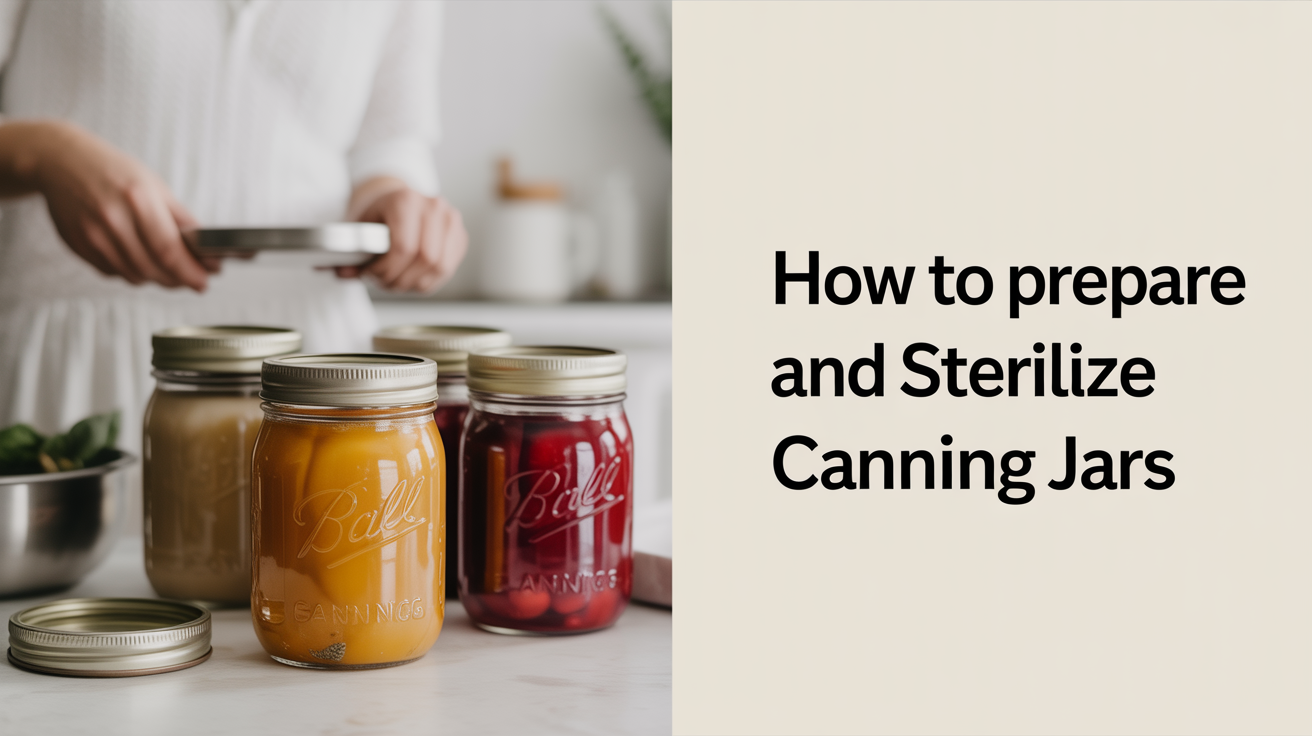
Getting jars ready is the step most new canners overthink. The rules around sterilizing, washing, and keeping jars hot are genuinely simple once you understand what each step is actually doing and when it matters.
Wash Jars Thoroughly Before Every Use
Start with clean jars regardless of anything else. Wash them in hot, soapy water, scrubbing inside and out with a bottle brush. Rinse well so no soap residue remains. This removes dust, storage odors, and any organic material that could interfere with your seal or harbor bacteria.
If you have a dishwasher, a full hot cycle without rinse aid works well. The dishwasher also conveniently keeps jars hot while you finish your prep, which matters for the next step.
Do not use cracked, chipped, or scratched jars. Run a finger around the jar's rim before filling. Any nick or roughness on the sealing surface means the lid cannot form a proper vacuum seal. Set those jars aside for dry storage or refrigerator use. A jar that looks fine on the outside can have a hairline crack that will shatter under the heat of processing, so also hold each one up to a light and look through the glass.
See what equipment you actually need for canning for guidance on choosing and maintaining jars long-term.
Keep Jars Hot Until You Fill Them
Hot jars going into hot liquid into a hot canner is the rule. Dropping a cold jar into a boiling-water bath or pressure canner creates thermal shock, and the glass can crack.
The easiest method: after washing, place jars upright in your canner or a large pot, cover with water, and bring to a simmer (around 180°F). Keep them there until you are ready to fill. Pull one jar at a time, empty the water, fill immediately, and return it to the canner.
Alternatively, run jars through the dishwasher on the heated-dry cycle and leave the door closed so they stay warm. If your dishwasher finishes early, set it to keep-warm or run a short rinse cycle again.
Room-temperature or cool jars are fine for recipes that will be processed long enough at high heat, but keeping jars hot costs nothing and eliminates the risk of thermal shock altogether.
Do You Actually Need to Pre-Sterilize Jars?
This is where the guidance changed in the last few decades and a lot of older advice still confuses people.
Current USDA and National Center for Home Food Preservation (NCHFP) guidance says you do NOT need to pre-sterilize jars that will be processed for 10 minutes or more in a boiling-water canner or in a pressure canner. Processing at those times and temperatures sterilizes the jar and its contents together.
Pre-sterilization IS required when:
- The recipe calls for a processing time of less than 10 minutes in a boiling-water canner
- The recipe explicitly requires pre-sterilized jars (some jams and jellies fall here)
When pre-sterilization is required, the method is straightforward: place clean jars upright in a boiling-water canner, cover with water by at least one inch, boil for 10 minutes (add one minute per 1,000 feet above sea level), and keep hot until you fill them.
The safest rule: follow the tested recipe exactly. If the recipe says pre-sterilize, do it. If it does not mention it and the processing time is 10 minutes or longer, you can skip pre-sterilization and simply keep jars hot. Never substitute your own judgment for the recipe's instructions on this point, because the processing time and sterilization step are calculated together.
See mason jar sizes explained for guidance on using the jar size the tested recipe specifies, since changing jar size can affect whether processing times are safe.
Inspect Lids and Bands Separately
Jars and lids are different things with different rules. New two-piece lids (flat lid plus screw band) do not need to be boiled before use. Current guidance from lid manufacturers and the NCHFP recommends washing lids in hot soapy water and keeping them warm, but not boiling them. Boiling can soften the sealing compound and actually reduce the lid's ability to seal properly.
Bands can be reused as long as they are free of rust, dents, and corrosion. Lids should not be reused for home canning, since the sealing compound is designed to compress and form a seal once. A used lid may look fine but seal unreliably.
For more detail on selecting and replacing lids, see canning lids and bands: why you replace lids every time.
A Jar Prep Checklist
Run through these steps before every batch:
| Step | What to check |
|---|---|
| Wash | Hot soapy water, rinsed thoroughly |
| Inspect rim | No chips, nicks, or roughness |
| Inspect glass | No hairline cracks, hold up to light |
| Keep hot | Simmering in canner or warm dishwasher |
| Pre-sterilize | Only if recipe requires it OR processing time is under 10 minutes |
| Lids | Washed, warm, not previously used |
| Bands | Rust-free, not dented |
Frequently Asked Questions
Can I reuse jars from store-bought foods like pasta sauce or pickles?
Commercial food jars are not designed or tested for home canning. The glass is thinner, and the jar rim is often shaped differently than a standard mason jar rim. These jars are more likely to crack under processing heat and will not seal reliably with two-piece canning lids. Use jars specifically made for home canning.
How do I sterilize jars if my altitude is above 1,000 feet?
Boil for one additional minute per 1,000 feet of elevation above sea level. At 3,000 feet, that means 13 minutes instead of 10. Altitude adjustment also applies to processing times in your recipe, so check the USDA or NCHFP guidelines for your elevation before you start.
A jar did not seal after processing. Can I reprocess it?
You can reprocess within 24 hours using a new lid. Check the jar rim carefully for any damage first. If the rim is fine, use a new lid, reprocess for the full time the recipe specifies, and refrigerate immediately if it fails to seal again. Food quality declines with reprocessing, so many canners simply refrigerate and use the jar within a few days rather than reprocess.
Is it safe to put jars straight from the freezer into a hot canner?
No. Any significant temperature difference between the jar and the canner water risks cracking the glass. Always start with jars at room temperature or warmer. Jars should never go from freezing to boiling without time to equalize.
What if I see white film or mineral deposits on clean jars?
Hard water leaves calcium and mineral deposits that look like a cloudy film. This is harmless and does not affect canning safety. To remove it, soak jars in a dilute solution of white vinegar and water, then rinse thoroughly before use. Do not confuse mineral deposits with actual food residue, which requires scrubbing and hot soapy water.