Pickling Salt vs Table Salt vs Kosher Salt: What to Use for Canning
Learn which salt is safe for canning and pickling, why iodized table salt causes cloudy brine, and how to substitute kosher salt with volume conversion.
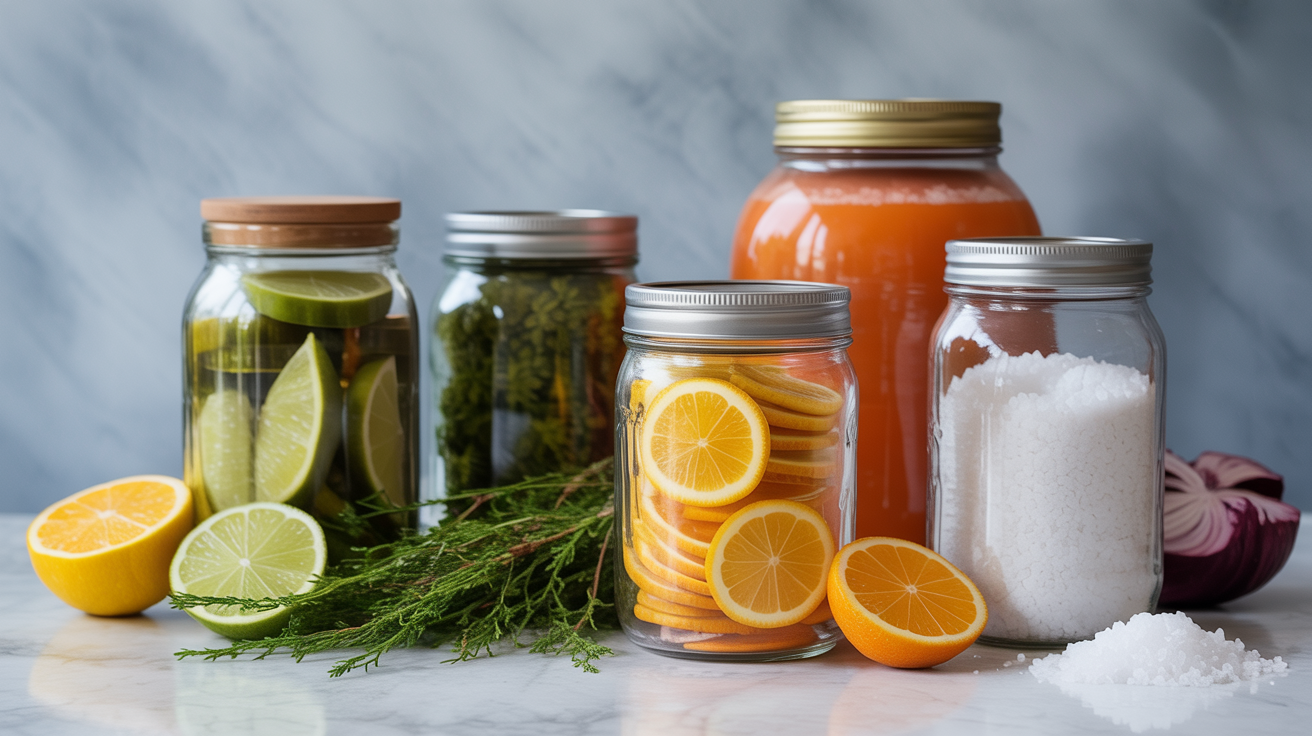
Salt seems like salt. It all tastes salty, it all looks white, and a cup is a cup. But when you are making shelf-stable pickles, the type and amount of salt in your brine are part of what makes the recipe safe, not just flavorful. Using the wrong salt can produce cloudy jars, soft vegetables, or a brine that does not perform the way the recipe developer tested it.
Here is what you need to know about the three salts you are most likely to have on hand.
At a Glance
- Pickling (canning) salt is pure sodium chloride with no additives. It is the first choice for any brine, pickled or fermented.
- Iodized table salt contains iodine and anti-caking agents that cloud brine and can discolor pickles; save it for the stovetop.
- Kosher salt is a usable substitute, but its crystal size means a cup of it weighs less than a cup of pickling salt. Convert by weight or use the volume ratios below.
- For vinegar-based, water-bath-canned pickles, acidity is the primary safety barrier; salt mainly affects texture and flavor there.
- For fermented pickles and sauerkraut, salt concentration is a direct safety control, not just a flavor choice. Do not reduce it.
- When in doubt about a brine's clarity or a jar's seal, throw it out rather than guess.
What Pickling Salt (Canning Salt) Actually Is
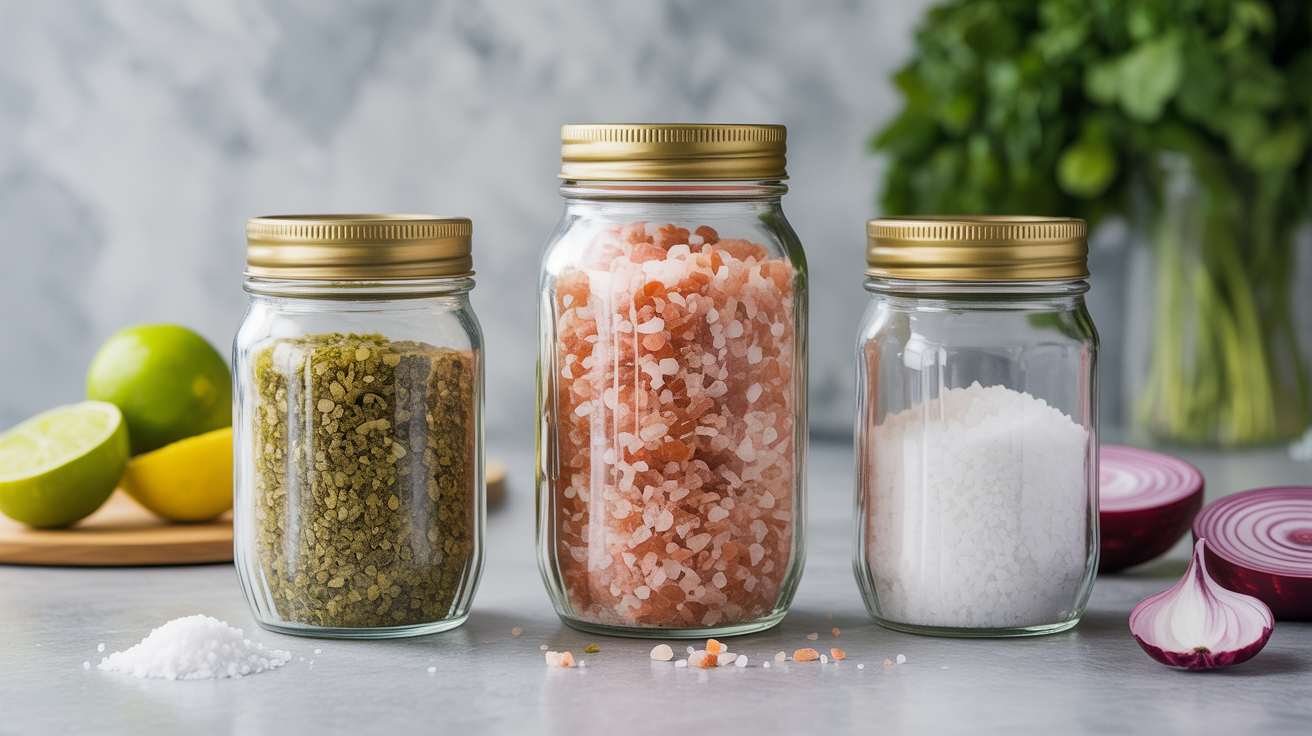
Pickling salt, also sold as canning salt, is pure sodium chloride with no additives. No iodine, no anti-caking agents, no flowing agents of any kind. That purity is the reason it is the recommended choice for home canning: NCHFP's guidance on brined and fermented vegetables is direct on this point, stating that noncaking material added to other salts can make the brine cloudy.
Because the granules are fine and uniform, pickling salt dissolves quickly in cold or room-temperature brine. A cup of pickling salt weighs more than a cup of kosher salt or some coarse salts, so the recipe's volume measurement reflects a specific, tested salt density. When you use the product the tested recipe assumed, your brine concentration lands where it was designed to land.
Find pickling salt in the canning section of grocery stores or farm supply stores, often in one- to four-pound bags. It keeps well in a sealed container away from humidity.
Why Iodized Table Salt Causes Problems in Pickles
Most ordinary table salt sold in the United States contains two additives: iodine (added for public health reasons) and an anti-caking agent such as calcium silicate or sodium ferrocyanide. Both create visible problems in pickle jars.
Iodine reacts with tannins, enzymes, and compounds in vegetables and turns the brine cloudy or brownish. The pickles are not necessarily unsafe, but they look unappealing and it becomes difficult to distinguish harmless discoloration from actual spoilage. Anti-caking agents can also cloud the liquid and leave a slight sediment at the bottom of the jar. That sediment is sometimes mistaken for a sign of spoilage by first-time canners, which is its own kind of problem: it forces you to second-guess a jar that is probably fine.
Beyond aesthetics, the density difference matters. Table salt typically contains about the same weight per cup as pickling salt (both are fine granules), but the additives take up a small share of that volume. In practice the difference is minor, but you are already deviating from the tested formulation in ways that are unnecessary when pickling salt is readily available.
The short version: save iodized table salt for cooking on the stovetop where the difference is invisible. Keep it out of pickle brine.
How Kosher Salt Compares
Kosher salt is pure sodium chloride with no iodine and, for most brands, no anti-caking agents. That makes it a better substitute than table salt if pickling salt is unavailable. However, it has one meaningful catch: the crystals are larger and less dense, so a cup of kosher salt contains significantly less actual salt by weight than a cup of pickling salt.
The conversion depends on the brand. Two commonly used approximations:
| Salt type | Volume equal to 1 cup pickling salt |
|---|---|
| Pickling salt (canning salt) | 1 cup |
| Morton Kosher Salt | about 1¼ cups |
| Diamond Crystal Kosher Salt | about 1¾ cups |
These conversions are approximate. Weighing salt on a kitchen scale is the most reliable method. One cup of pickling salt weighs roughly 270 to 300 grams depending on how tightly it is packed. Match that weight, not the volume, when substituting.
Even with the conversion done correctly, kosher salt is a substitute. Tested recipes were formulated with pickling salt in mind. If you have access to canning salt, use it. Keep kosher salt as a backup when you run out mid-project.
Salt in Brine and Food Safety
For vinegar-based pickled vegetables processed in a water-bath canner, acidity (vinegar) is the primary safety barrier. Salt contributes flavor, texture, and some inhibition of undesirable microbes, but the acidic pH is what makes these pickles shelf-stable. Changing the salt type by a small amount will affect taste and texture more than outright safety in those recipes, provided you still use a tested formulation with the right vinegar strength.
Fermented pickles are different. Lacto-fermented vegetables like traditional dill pickles or sauerkraut rely on salt concentration to suppress harmful bacteria while lactic-acid bacteria lower the pH over several days. NCHFP's sauerkraut guidance describes salt as favoring the growth of desirable bacteria while inhibiting others, and states plainly that you should not attempt sauerkraut or fermented pickles by cutting back on the salt required. Too little salt lets harmful organisms gain a foothold before enough acid has developed. Too much can inhibit the fermentation itself. The recipe's salt amount is calibrated for that exact balance, so use the tablespoons-per-pound figure your tested recipe specifies rather than estimating by taste.
In both cases, the underlying principle is the same: use the salt type and amount the recipe specifies. Do not reduce salt to lower sodium, and do not freely swap types without accounting for density. For exact guidance on any recipe, follow current USDA, NCHFP, or Ball recommendations. If you are uncertain whether your brine turned out correctly, throw it out.
Read more about why tested formulations matter in why you should only use tested canning recipes.
Comparison at a Glance
| Salt | Additives | Best for canning? | Notes |
|---|---|---|---|
| Pickling / canning salt | None | Yes, first choice | Pure NaCl, fine grain, dissolves cleanly |
| Iodized table salt | Iodine + anti-caking agent | No | Clouds brine; discolors pickles |
| Non-iodized table salt | Anti-caking agent only | Acceptable in a pinch | Can still cloud brine; adjust by weight |
| Kosher salt (Morton) | None (check label) | Yes, with conversion | Use about 1¼ cups per 1 cup pickling salt |
| Kosher salt (Diamond Crystal) | None | Yes, with conversion | Use about 1¾ cups per 1 cup pickling salt |
| Sea salt, coarse or flake | Varies | Not ideal | Variable density and additives; measure by weight |
Weighing Salt Instead of Measuring by Volume
If your kitchen scale is out, weighing salt removes the guesswork entirely. A tested recipe that calls for "1 cup pickling salt" is really asking for roughly 270 to 300 grams of sodium chloride. Once you know that number, any salt (pickling, non-iodized table, or kosher) can be substituted safely for a vinegar-based brine by matching the weight, not the cup measurement.
| Recipe calls for | Approximate weight | What to measure out |
|---|---|---|
| 1 cup pickling salt | 285 g | 285 g of any additive-free salt |
| 1/2 cup pickling salt | 143 g | 143 g of any additive-free salt |
| 1/4 cup pickling salt | 71 g | 71 g of any additive-free salt |
For fermented pickles and sauerkraut, do not use this shortcut to change the total amount of salt. Weighing helps you hit the recipe's target accurately, not to decide you would rather use less.
Storing and Buying Salt for a Canning Season
Pickling salt does not expire if kept dry. A four-pound bag carries most canners through a full summer of cucumber pickles and salsa. Store it in a sealed container or resealable bag away from steam and humidity, which can cause clumping.
If you buy in bulk, label the container clearly so it does not get mixed up with table salt in a busy kitchen. The two look identical once decanted, and reaching for the wrong one mid-batch is easy to do.
To learn more about brining basics for your first pickle batch, see how to make canned pickles: brining basics. If you are deciding between making shelf-stable pickles or a quick fridge batch, refrigerator pickles vs canned pickles walks through the trade-offs. For salsa where salt and acid both play a role, how to can salsa using a tested recipe covers the full process.
Frequently Asked Questions
Can I use sea salt for canning pickles? Sea salt varies widely by brand and grain size. Some are pure sodium chloride; others contain trace minerals that can cloud brine. If a sea salt is pure (no additives) and you measure by weight rather than volume, it can work. That said, pickling salt is cheaper, consistent, and designed for this use. Sea salt is better saved for finishing dishes at the table.
My brine turned cloudy. Did I use the wrong salt? Cloudy brine in pickles made with iodized salt is almost certainly from the additives in the salt. Cloudiness can also come from hard water, starch from cut vegetables, or the early stages of lacto-fermentation (in fermented pickles, cloudiness is normal and expected). If you used pickling salt and proper vinegar and the recipe is not a fermented style, check that the cucumbers were fresh and that you removed the blossom ends, which contain enzymes that soften pickles and can contribute to murk.
Does the salt type matter for jam and jelly? Jam and jelly recipes typically call for no salt or only a pinch for flavor. At those small quantities, the choice of salt has no measurable effect on safety or gel formation. Use whatever is handy.
Can I reduce the salt in a pickle recipe to make it less salty? For vinegar-based pickles processed in a water-bath canner, the vinegar provides the main safety barrier, so a small reduction in salt typically does not create a safety risk. However, it does change texture (salt firms cucumbers through osmosis) and flavor in ways the recipe did not intend. For fermented pickles, do not reduce salt: the concentration is a direct safety control. Always consult NCHFP or USDA guidance before modifying any canning recipe.
Where do I buy pickling salt? Most grocery stores stock it in the canning aisle, especially in late summer. Farm supply stores like Tractor Supply carry it year-round in larger bags. It is also available online. Look for labels that say "canning salt" or "pickling salt" and check that the ingredients list only sodium chloride with nothing added.
Is pickling salt the same thing as canning salt? Yes. "Pickling salt" and "canning salt" are two names for the identical product: pure, fine-grain sodium chloride with no additives. Different brands and regions favor one label over the other, but you are looking for the same ingredient list either way. If a bag says only "salt" with nothing else on the ingredients panel, it is safe to use in place of either.