Refrigerator Pickles vs Canned Pickles
Refrigerator pickles are quick and crisp but need refrigeration. Canned pickles are shelf-stable but require a tested water-bath recipe.
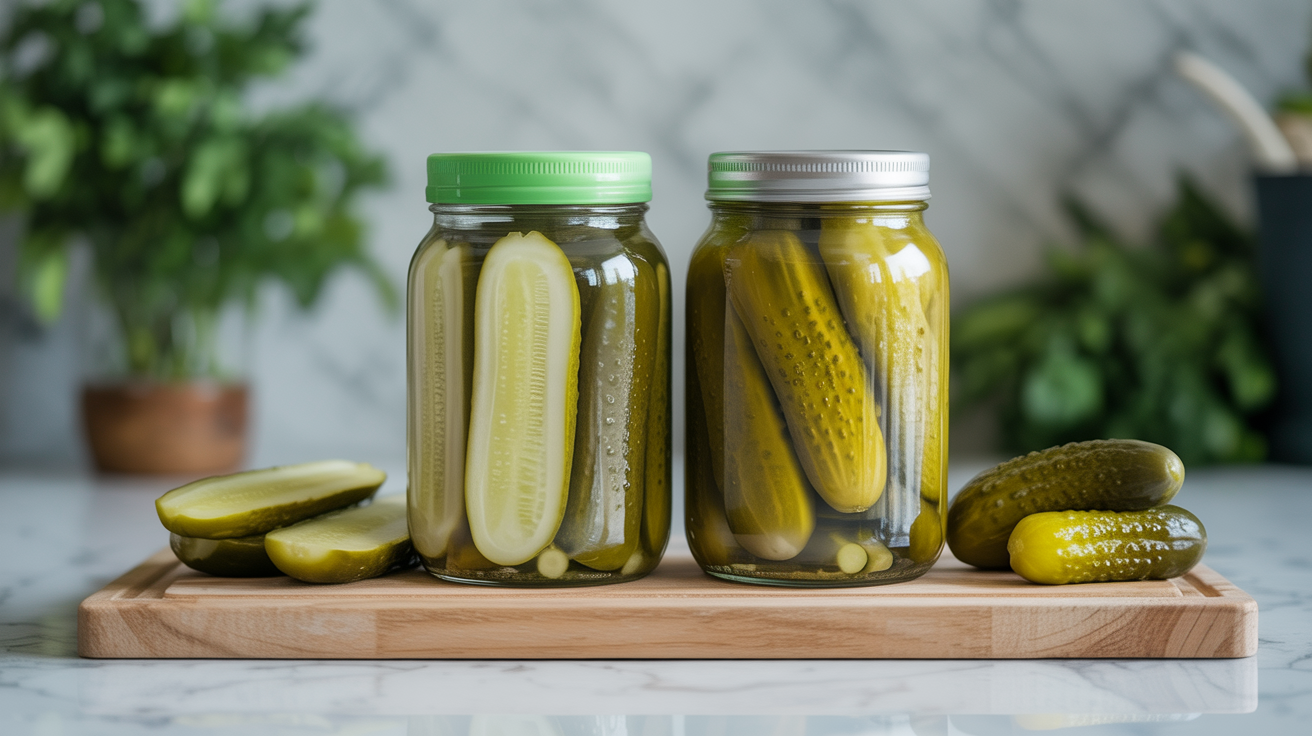
Cucumbers hit peak season and suddenly there are more than you can eat fresh. Two paths exist for turning them into pickles: stash them in the fridge in a vinegar brine, or process them in a boiling-water canner so they live on your pantry shelf for a year or more. Both produce pickles, but the methods, the safety rules, and the results differ enough that it is worth understanding each before you start slicing.
At a Glance
- Refrigerator pickles skip heat processing entirely; they rely on cold storage plus vinegar and must stay refrigerated at all times.
- Canned pickles are heat-processed in a boiling-water canner, which creates a true vacuum seal and makes them shelf-stable for a year or more unopened.
- A stovetop "pop" from a hot-brine lid is not the same as a food-safe vacuum seal; only proper water-bath processing produces that.
- Refrigerator pickles are best eaten within two to four weeks; canned pickles typically hold quality for 12 to 18 months on the shelf.
- Water-bath canned pickles require a brine at 5 percent vinegar acidity or higher and a tested recipe; you cannot safely improvise the ratios.
- Choose refrigerator pickles for speed and small batches, and canned pickles when you need pantry storage or shelf-stable gifts.
What Are Refrigerator Pickles?
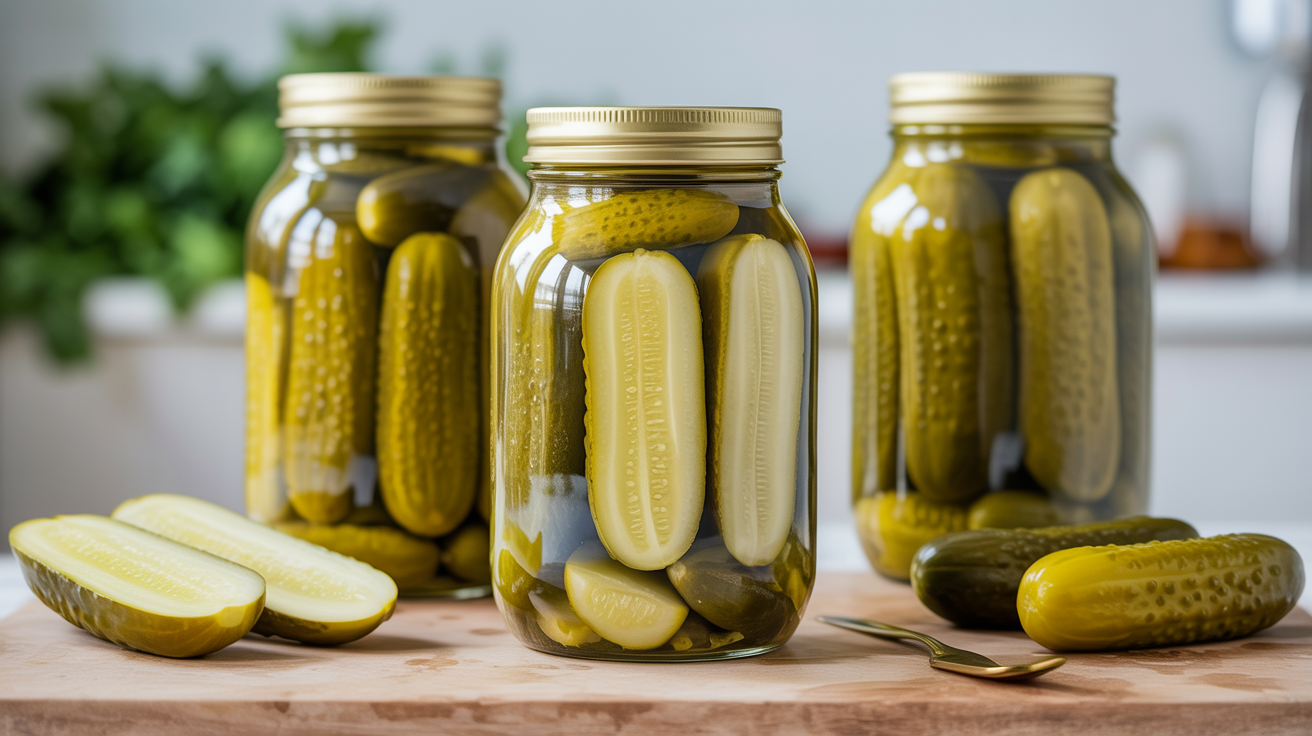
Refrigerator pickles, sometimes called quick pickles or fridge pickles, skip any heat processing entirely. You pack your vegetables into clean jars, pour a hot or cold vinegar brine over them, seal the lid, and refrigerate. That is the whole process.
Because the jars are never heat-processed to create a vacuum seal, the lids do not seal in a food-safe way. The pickles stay safe only because refrigeration slows spoilage and vinegar lowers pH enough to inhibit most pathogens at cold temperatures.
A few things to keep in mind:
- They must stay refrigerated at all times. A refrigerator pickle left on the counter is not shelf-stable and should not be treated as one.
- Eat them within two to four weeks. After that, texture and flavor decline and food safety can become a concern.
- No water-bath processing needed. In fact, processing a refrigerator-pickle recipe in a water-bath canner does not automatically make it shelf-safe, because the brine ratio may not be calibrated for that purpose.
The big appeal is speed. Many recipes can go from cucumber to crunchy pickle in 24 to 48 hours with almost no equipment.
What Are Canned Pickles?
Canned pickles are processed in a boiling-water (water-bath) canner, which drives air from the jar and creates a vacuum seal. That seal, combined with an acidic brine that meets the minimum pH required for water-bath canning (4.6 or below), makes the pickles shelf-stable at room temperature.
Shelf-stable means you can store them in a cool, dark pantry for a year or more without refrigeration, opening a jar only when you need it.
This is the key difference from refrigerator pickles: the seal actually keeps the contents safe over long storage, not just cold temperatures.
For canned pickles to be safe, you need to follow a tested recipe from a source such as the USDA Complete Guide to Home Canning, the National Center for Home Food Preservation (NCHFP), or a current edition of the Ball Blue Book. Those recipes specify exact vinegar concentration, jar size, headspace, and processing time. Changing those details can compromise safety.
NCHFP's general guidance on pickling is direct about why: the level of acidity in a pickled product is as important to its safety as it is to taste and texture, and there must be a minimum, uniform level of acid throughout the finished product to prevent the growth of botulinum bacteria. That's why the guidance specifically calls for white distilled or cider vinegar at 5 percent acidity (50 grain), never a vinegar of unknown strength and never a diluted substitute.
Refrigerator Pickles vs Canned Pickles: A Side-by-Side Look
| Factor | Refrigerator Pickles | Canned Pickles |
|---|---|---|
| Equipment needed | Jars, brine ingredients | Jars, canner, rack, lids |
| Heat processing | None | Boiling-water bath |
| Storage | Refrigerator only | Pantry (unopened) |
| Shelf life | 2 to 4 weeks refrigerated | 12 to 18 months shelf-stable |
| Time from start to eating | 24 to 48 hours | Days (for flavor to develop) plus processing |
| Recipe flexibility | High | Low (follow tested recipes) |
| Texture | Typically crisper | Can soften slightly from heat |
| Skill level | Beginner-friendly | Requires learning water-bath basics |
A Worked Example: Real Processing Times for Canned Pickles
Processing time for canned pickles is not a rough guess, it comes straight from testing at specific jar sizes and elevations. NCHFP's tested Quick Fresh-Pack Dill Pickles recipe is a useful real-world example of what "follow the recipe exactly" actually means in practice:
| Jar Size | 0 to 1,000 ft | 1,001 to 6,000 ft | Above 6,000 ft |
|---|---|---|---|
| Pints | 10 minutes | 15 minutes | 20 minutes |
| Quarts | 15 minutes | 20 minutes | 25 minutes |
That recipe also specifies a headspace of 1/2 inch and calls for the cucumbers to sit in a salt brine for 12 hours before the vinegar solution is added. Skip a step, swap a smaller jar's time for a quart, or shortchange the elevation adjustment, and you are no longer running the tested process, even though every other ingredient matches. This is the level of precision refrigerator pickles simply do not require, since cold storage rather than the process itself is doing most of the safety work there.
Do Refrigerator Pickles Need Canning?
No. Refrigerator pickles do not need canning and should not be treated as if they were canned. The term "canning" specifically refers to heat-processing sealed jars to create a shelf-stable product. A jar of refrigerator pickles, even with a screwed-on lid, has not been canned in that sense.
This matters because of a common misunderstanding: people sometimes assume that putting hot brine into a jar and hearing the lid pop means the jar is safely sealed. That pop can happen, but it does not equal a safe vacuum seal for long-term storage. Without proper heat processing, refrigerator-pickle jars should be treated as open containers and kept cold.
If you want shelf-stable pickles, use a tested water-bath recipe and follow it precisely. If you want quick pickles you will eat within a few weeks, refrigerator pickles are a simpler route.
Choosing the Right Method for Your Situation
Refrigerator pickles make sense when:
- You have a small batch of cucumbers and want pickles ready in a day or two
- You do not own canning equipment
- You plan to share them or eat them within a few weeks
- You want to experiment with flavor variations without committing to a tested recipe
Water-bath canned pickles make sense when:
- You have a large harvest and need shelf storage
- You want to give jars as gifts that do not require refrigeration
- You are building a pantry supply for winter
- You are willing to follow tested processing times and measurements exactly
For the jam-making side of this category, the same tested-recipe principle applies. Jams and jellies processed in a water-bath canner require the right pectin and acid balance, not just boiling the jar. See the guide to how pectin works and getting your jam to set for details on why that chemistry matters. And if you are sorting out the difference between jam, jelly, and preserves while you shop for recipes, this breakdown of jam vs jelly vs preserves covers the distinctions clearly.
Frequently Asked Questions
Can I process refrigerator pickle recipes in a water-bath canner to make them shelf-stable?
Not reliably. Refrigerator pickle recipes are formulated for short cold storage, not for canning. The vinegar concentration, headspace, and processing time all need to be calibrated together for a safe shelf-stable result. Use a tested water-bath pickle recipe from the USDA, NCHFP, or a current Ball guide if you want shelf-stable pickles.
How long do refrigerator pickles last?
Most refrigerator pickles stay at their best for two to four weeks in the refrigerator. After that, texture softens and flavor changes. Discard any jar that smells off, shows signs of mold, or has been left unrefrigerated for more than a couple of hours. When in doubt, throw it out.
Are refrigerator pickles safe to eat without processing?
Yes, when made correctly and kept cold. The combination of vinegar and refrigeration keeps them safe for their short shelf life. The critical rule is that they must remain refrigerated. They are not shelf-stable and cannot be stored at room temperature.
Why do canned pickles use specific vinegar concentrations?
The acidity of vinegar is what makes water-bath canning safe for pickles. Standard white and cider vinegars sold for canning are 5% acidity. Diluting the brine or using weaker vinegar can raise the pH above the 4.6 threshold that keeps pathogens like botulism from growing. Always use vinegar labeled at 5% acidity and follow the brine ratio in your tested recipe.
Can I reuse the brine from store-bought pickles to make refrigerator pickles?
You can experiment with this for refrigerator pickles (not for canning), but results vary. Commercial brines may be diluted or contain additives that affect flavor and the acidity may have dropped during processing. Treat any pickles made this way as a short-term refrigerator product and eat them within a week or two.
Can I make refrigerator pickles with less vinegar for a milder taste?
You can adjust vinegar-to-water ratios more freely in a refrigerator pickle than you ever could in a canned recipe, since refrigeration, not acidity alone, is doing the safety work. That said, going very low on vinegar for a long-stored batch is still not a great idea. If you want a milder pickle, look for a tested refrigerator-pickle recipe with a gentler ratio rather than diluting a stronger one on your own, and keep the batch on the shorter end of the two-to-four-week window.
For a full introduction to making and canning your first batch of jam the safe way, the guide to making and canning jam as a beginner walks through the water-bath process step by step.