Signs of Spoiled Canned Food (When to Throw It Out)
Learn the warning signs of spoiled home-canned food, from bulging lids to off odors, and how to dispose of suspect jars safely. When in doubt, throw it out.
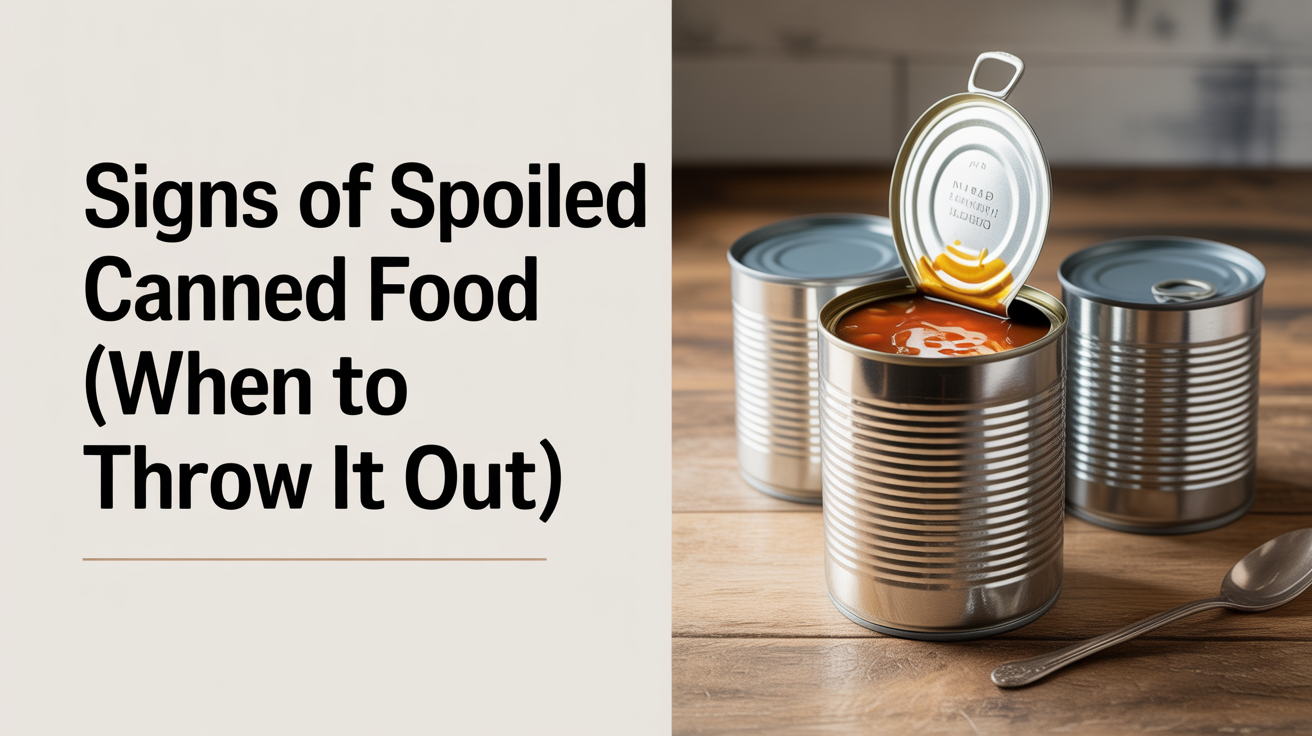
Home canning is deeply rewarding, and most jars you process turn out exactly right. But knowing how to recognize a jar that has gone wrong is just as important as knowing how to fill and seal one correctly. Some spoilage is easy to see or smell; other spoilage, including the toxin that causes botulism, can be present with no obvious signs at all. That last fact is the reason this article exists.
Why You Should Never Taste Suspect Food
The old advice to "taste a little and see if it seems okay" is genuinely dangerous. Clostridium botulinum produces a toxin that is odorless, colorless, and tasteless in many cases. You cannot detect it by tasting, and even a tiny amount can cause serious illness. The same is true for other spoilage organisms that may not announce themselves with an obvious smell.
This is not meant to frighten you away from canning. It's meant to underscore why checking your jars before opening, using tested recipes from the start, and following proper processing methods are the real safeguards. Visual and physical checks are your first line of defense, but they are not foolproof. Prevention through correct method is the actual protection.
If you ever suspect you or someone else has eaten food from a questionable jar and develops symptoms (double vision, difficulty swallowing, muscle weakness), seek medical help immediately and contact your local health department or poison control center.
Physical Warning Signs to Check Before Opening
These are the things you can see and feel before a jar is ever opened. Make these checks a habit whenever you pull a jar from storage.
A Bulging, Swollen, or Dome-Shaped Lid
A properly sealed lid should be concave, curving slightly downward in the center. If the center of the lid is domed upward or you can press it down and it springs back with a click, that is a sign of internal pressure from gas-producing microorganisms. Do not open this jar.
Swollen lids are one of the clearest signals that something has gone wrong inside. For low-acid foods (green beans, corn, beets, meats, poultry), this pattern is especially serious because gas-producing spoilage can occur alongside botulism toxin. See botulism and home canning: what you must know for a fuller discussion of the risk.
A Loose or Unsealed Lid
If the lid moves, flexes, or lifts off without resistance, the jar never formed a proper vacuum seal or the seal has failed since processing. An unsealed jar is not necessarily spoiled, but it is not safe to eat without refrigeration, and any jar that has been stored at room temperature without a seal should be discarded.
For more on how to tell whether a seal formed correctly and what to do when it hasn't, see how to tell if a canning seal failed.
Leaking or Seeping Around the Lid
If you notice residue, stickiness, or dried liquid around the rim and under the band, something has been pushing its way out. A jar that is seeping under pressure is losing its contents because internal gas is building. That is not a storage accident. It is a warning.
Warning Signs When You Open or Inspect the Jar
Some signs only appear once the lid is removed or the jar is opened. Even if the jar passed all the visual checks above, keep your attention on these cues.
Liquid That Spurts or Foam That Rises
When you remove the lid, the contents should be calm. If liquid spurts out, foam rises to the surface, or you hear an unexpected release of gas beyond the brief hiss of a broken vacuum seal, stop. Do not proceed. Fermentation or bacterial activity inside a sealed jar means contamination.
An Off or Foul Odor
Trust your nose, but don't lean in close to sniff an unknown jar. Hold it at arm's length. Spoiled food often (though not always) has an unpleasant or simply wrong smell: sour, yeasty, rotten, or just different from what the food should smell like. If something seems off, that judgment is worth respecting. As noted above, botulinum toxin itself may not produce an odor, so the absence of a bad smell does not guarantee safety.
Mold
Any mold (white, green, black, fuzzy, or flat) on the surface of the food, floating in the liquid, or visible under the lid means the jar should be discarded. Do not skim off the mold and eat what's underneath. Mold can produce mycotoxins that penetrate deeper into food than the visible growth, and its presence means the jar was not processed correctly.
Cloudy, Fizzy, or Foamy Liquid
Some foods naturally produce a slightly hazy liquid. Fermented pickles are the exception, but fermentation and canning are different processes, and home-canned goods should not be fermenting in the jar. Unexpected cloudiness, bubbles rising when the jar is undisturbed, or a foamy texture in the liquid are signs of microbial activity.
Unusual Color Changes
Food that has changed dramatically in color since you put it up is worth scrutinizing. Some darkening is normal in certain vegetables over time, but sudden or extreme color shifts can indicate spoilage.
The Complete Warning-Sign Checklist
Use this list every time you pull a jar from the pantry.
Before opening, check for:
- Lid domed upward or bouncing when pressed
- Lid that moves, flexes, or is not firmly sealed
- Leaking, seeping, or dried residue around the lid or band
- Any visible cracks or chips in the jar
When opening, check for:
- Liquid that spurts out or foam that rises unexpectedly
- Any gas release beyond a brief hiss
- An off, sour, yeasty, or otherwise wrong smell
- Mold of any color on the food or under the lid
- Cloudy or foamy liquid that should be clear
- Rising bubbles in a jar that has been sitting still
- Unusual or extreme color changes
The rule: If any one of these is present, do not eat the food. Do not taste it. Discard it safely.
How to Discard a Suspect Jar Safely
This step matters more than people expect, because low-acid foods (green beans, corn, meats) may contain botulinum toxin that can be absorbed through skin or mucous membranes. Pouring the contents down the sink or tossing the open jar in the trash without precautions exposes others and pets.
The National Center for Home Food Preservation (NCHFP) and the USDA provide a specific detoxification and disposal method for suspect low-acid home-canned foods. The general approach involves containing the jar without opening it, or detoxifying by boiling. The details matter and should come from official guidance, not a summary. Go directly to the NCHFP website (nchfp.uga.edu) or the USDA Complete Guide to Home Canning for the current, authoritative disposal instructions before handling a jar you suspect is seriously contaminated.
For jars where the spoilage is clearly mold or fermentation (not suspected botulism in a low-acid food), disposal is simpler, but always wash your hands thoroughly after handling any spoiled jar. Bag the jar before placing it in the trash.
Prevention Is the Real Protection
Visual and physical checks are important, but they are a last line of defense. The best protection against spoiled home-canned food is correct processing from the start. That means using tested recipes from the USDA Complete Guide, the NCHFP, or current Ball resources; using a pressure canner for all low-acid foods; maintaining correct processing times and pressures; and inspecting jars within 24 hours of processing to confirm seals formed.
Understanding what is headspace and why it does it matter is part of that foundation too, because incorrect headspace affects both the seal and the processing outcome.
No visual check can catch every unsafe jar. That's the reality of food safety. Following tested methods consistently is what prevents problems before a jar ever reaches your pantry shelf.
FAQ
Can botulism-contaminated food look and smell completely normal?
Yes. This is one of the most important facts in home-canning safety. Clostridium botulinum does not reliably change the appearance, color, smell, or texture of food. A jar can look perfectly normal and still contain toxin. This is why you should never taste suspect food and why correct processing from the start is the only real safeguard.
What if my jar smells fine but the lid was bulging?
Discard it. A bulging lid means internal pressure from gas-producing microbial activity. The absence of an off odor does not change that. Follow the safe disposal guidance from the NCHFP before handling the jar.
Is it safe to eat home-canned food if I scrape the mold off the top?
No. Discard the entire jar. Mold growth in a sealed jar indicates processing failure, and mold can produce harmful compounds that penetrate below the visible surface. Scraping is not a safe fix.
How long can properly processed home-canned food be stored?
The USDA recommends using home-canned foods within one year for best quality. After that, quality may decline even if safety is maintained. Always store jars in a cool, dark place, and discard any jar that shows warning signs regardless of how recently it was processed.
If I'm unsure about a jar, is it okay to give it to someone else to see what they think?
No. If you have doubts about a jar, those doubts are information. Do not pass along food you are uncertain about. Discard it using the safe disposal method and note what went wrong so you can adjust your process next time.