Why You Can't Water-Bath Can Low-Acid Foods
Learn why low-acid foods like vegetables, beans, and meats must be pressure canned—and why boiling water alone can never make them safe to store on the shelf.
If you have ever wondered why your neighbor water-bath cans tomatoes but the extension office insists you must pressure can green beans, this article will clear that up. The short answer comes down to pH, temperature, and a stubborn bacterial spore that boiling water simply cannot kill. Understanding the science makes the rule feel less arbitrary and helps you make safe choices every time you put up food.
The pH Line That Divides Canning Methods
Canning safety starts with acidity. Foods with a pH of 4.6 or below are considered high-acid. The acid itself acts as a barrier: it inhibits the growth of Clostridium botulinum, the bacterium responsible for botulism, and allows boiling-water temperatures to finish the job on any remaining harmful microbes.
Foods above pH 4.6 are low-acid. That category is large and probably includes most of what grows in a typical vegetable garden.
Which Foods Are Low-Acid
The following foods fall above the 4.6 pH threshold and must be pressure canned if you intend to store them at room temperature:
- Plain vegetables -- green beans, corn, carrots, beets, potatoes, peas, and others
- Dried beans and legumes -- kidney beans, chickpeas, black beans, lentils
- Meats, poultry, and seafood -- including broths and stocks made from them
- Mixed dishes and soups -- any combination where a low-acid ingredient is present
- Figs -- naturally low-acid despite being a fruit; require added acid in tested recipes
If a food on this list shows up in a tested canning recipe that calls for a water bath, read the recipe carefully. It almost certainly includes added vinegar, citrus juice, or another acidifying agent that brings the pH down below 4.6 before processing -- turning it into a pickle. That change in category is deliberate and precisely measured in the recipe. You cannot replicate it by guessing.
What Boiling Water Can and Cannot Do
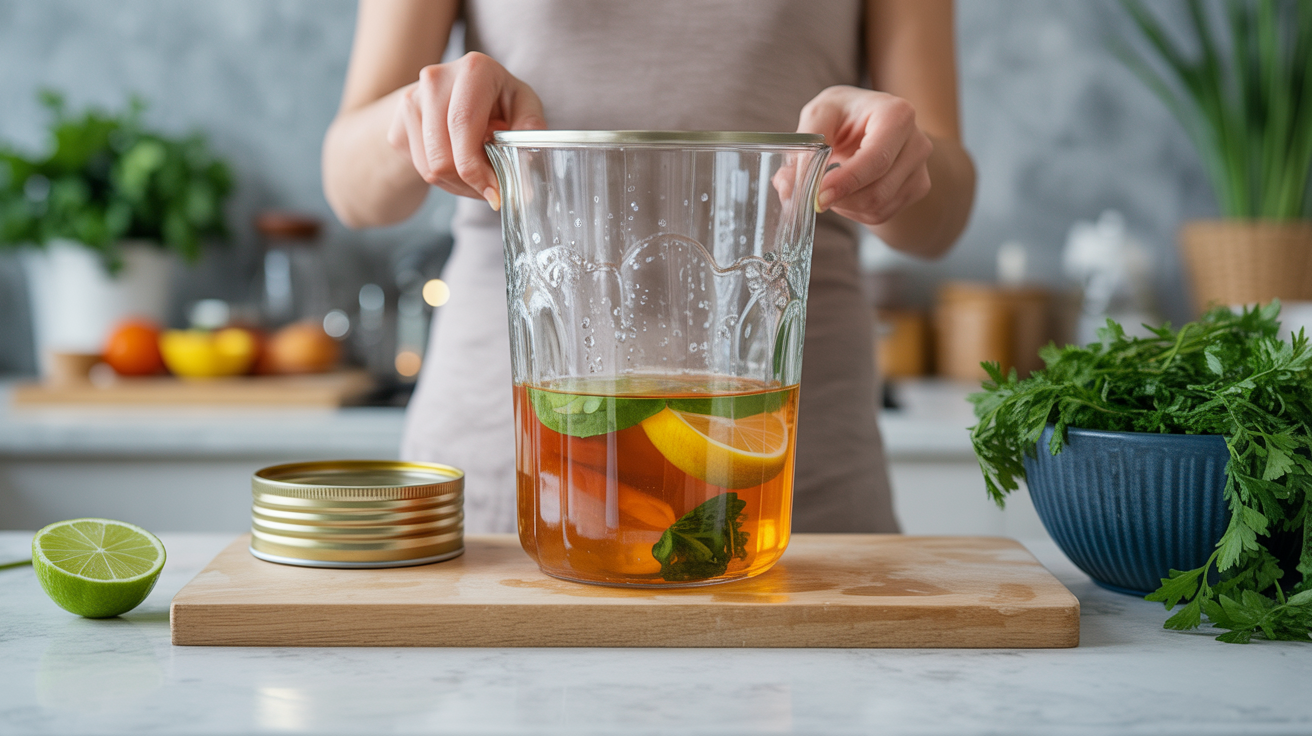
A boiling-water canner runs at 212°F (100°C) at sea level. That temperature is genuinely effective against a wide range of spoilage organisms -- molds, yeasts, and many vegetative bacteria. For high-acid foods, that is enough.
The problem is Clostridium botulinum spores.
These spores are not the same as the vegetative bacteria that normal heat easily destroys. Spores are dormant, protective structures the organism produces when conditions get difficult. They can survive a full rolling boil. Researchers have documented this thoroughly, which is why tested recipes rely on a higher temperature rather than longer boiling times at 212°F.
Why More Boiling Time Does Not Help
A common misunderstanding is that you can compensate for the lower temperature by simply processing longer. Extended boiling time cannot raise the temperature of the contents above 212°F -- that is a physical limit of water at atmospheric pressure. Boiling a jar of green beans for three hours in a water-bath canner will overcook them badly and still leave spores intact inside a sealed, oxygen-free jar.
That sealed environment is exactly where things go wrong. Once the jar cools and the lid seals, the jar contains little to no oxygen. Low-acid contents, no oxygen, residual moisture, and room-temperature storage give surviving spores everything they need to germinate and produce botulinum toxin. The jar may look and smell completely normal. Botulinum toxin has no color and no odor. You cannot judge safety by appearance alone.
How Pressure Canning Solves the Problem
A pressure canner works by trapping steam under pressure inside a sealed vessel. As pressure rises, so does the boiling point of water. At 10 pounds of pressure (PSI) at sea level, the temperature inside the canner reaches approximately 240°F (116°C). At 15 PSI, it can reach around 250°F (121°C).
That extra 28 degrees compared to boiling water is the difference that destroys Clostridium botulinum spores. Tested recipes specify exact combinations of pressure and time because both variables matter. Processing at the right pressure for too short a time, or at the wrong pressure setting for your altitude, can leave spores alive.
The Role of Altitude
Altitude affects both canning methods. Water boils at a lower temperature the higher you go, which is why water-bath canning recipes for high-acid foods often add time at elevations above 1,000 feet. For pressure canning, the adjustment works differently -- you increase the pressure setting rather than the time, so the temperature inside the canner stays in the safe range.
Always check the altitude adjustment table in your tested recipe source. The USDA Complete Guide to Home Canning and the National Center for Home Food Preservation (NCHFP) both include these tables and are updated when processing science changes.
What You Cannot Do to Make Low-Acid Foods Safe for Water-Bath Canning
Two workarounds come up regularly in online canning discussions. Both are unsafe.
Adding salt. Salt is a flavoring agent in home canning. It does not lower pH to a food-safe level, and it does not prevent the germination of botulinum spores in a sealed jar. Recipes call for specific amounts of salt for taste; you cannot use salt as a preservation substitute.
Adding a splash of vinegar or lemon juice to an untested recipe. Acidification works when a tested recipe is specifically designed around it -- with a precise ratio of vinegar to food, a required jar size, and a process time verified in a laboratory setting. Adding a tablespoon of vinegar to a jar of home-canned soup does not change the food's category in any meaningful way and does not make water-bath processing safe.
The science is straightforward: if you want to store low-acid foods at room temperature in sealed jars, you need a pressure canner and a tested recipe. See how to pressure can for beginners for a full walkthrough of the process from start to finish.
What to Do If You Don't Have a Pressure Canner
Not having a pressure canner does not mean you have to give up preserving your garden harvest. It means you choose a different method for low-acid foods.
Freeze them. Freezing preserves most vegetables well and requires only blanching before packaging. Green beans, corn, peas, and most other vegetables freeze beautifully.
Refrigerate for short-term use. Stocks, soups, and cooked beans keep safely in the refrigerator for several days or in the freezer for months.
Pickle using a tested recipe. If you enjoy the flavor of pickled vegetables, tested pickle recipes from the USDA or NCHFP use a specific vinegar-to-food ratio that acidifies the product below pH 4.6. A properly acidified pickle can then be safely processed in a boiling-water canner. The key phrase is "tested recipe" -- the acidification must be verified, not estimated. Learn more in our guide to pressure canning vegetables for a comparison of which vegetables can be pickled versus pressure canned plain.
If you are ready to invest in a pressure canner, it opens up a much wider world of home preservation. Our guide to pressure canning beans and legumes is a good starting project -- beans are straightforward, economical, and let you practice the process with a forgiving food before moving on to mixed dishes.
A Note on Safe Recipe Sources
For all pressure canning, use recipes from sources that have tested their processing times under controlled laboratory conditions:
- USDA Complete Guide to Home Canning -- available free from the National Institute of Food and Agriculture
- National Center for Home Food Preservation (NCHFP) -- nchfp.uga.edu, updated regularly
- Ball Blue Book Guide to Preserving -- widely available and peer-reviewed
- State cooperative extension programs -- many universities publish regionally relevant tested recipes
Do not rely on older family recipes, social media posts, or untested online sources for pressure canning guidance, even when they seem authoritative. Processing times that were printed decades ago may no longer reflect current food safety research.
If a sealed jar ever shows signs of spoilage -- a bulging lid, spurting liquid when opened, off odors, or unusual color -- do not taste it. Discard it safely without allowing the contents to contact skin, surfaces, or other food. When in doubt, throw it out.
FAQ
Can I water-bath can vegetables if I process them long enough?
No. Longer processing time cannot raise the temperature inside the jars above 212°F (100°C). Clostridium botulinum spores can survive at that temperature, which means water-bath canning cannot make plain vegetables safe for room-temperature storage regardless of processing time.
What happens if I accidentally water-bath can green beans?
Green beans processed in a boiling-water canner may look and smell fine but could contain botulinum toxin if spores survived and germinated. The safest course of action is to discard the jars without tasting the contents. If you or anyone has consumed the beans and develops symptoms -- blurred vision, difficulty swallowing, muscle weakness -- contact emergency medical services immediately. Botulism is treatable if caught early.
Does adding vinegar to a jar of vegetables make water-bath canning safe?
Only when you follow a tested recipe that was specifically formulated and verified with precise vinegar-to-food ratios. Adding vinegar to an untested recipe does not reliably lower pH throughout the jar, and it does not make water-bath processing safe. Use tested pickle recipes from the USDA or NCHFP if you want to water-bath can vegetables.
Is a pressure cooker the same as a pressure canner?
They look similar but are designed for different tasks. Most stovetop pressure cookers are too small to hold standard canning jars and have not been tested for consistent temperature and pressure distribution during the canning process. The USDA recommends using a purpose-built pressure canner -- either a dial-gauge or weighted-gauge model -- with a capacity of at least four quart jars.
Why can I water-bath can tomatoes but not tomatoes with meat added?
Plain tomatoes (with added acid per tested recipes) are borderline high-acid and have been tested for boiling-water processing. Adding meat, vegetables, or other low-acid ingredients to the jar raises the overall pH and changes the density, which alters the heat penetration profile. Any recipe that combines tomatoes with low-acid ingredients -- such as a meat sauce or salsa with peppers and onions -- requires pressure canning. Always follow the specific tested recipe rather than adapting a high-acid recipe by adding ingredients.