How to Can Applesauce at Home
Learn how to safely can smooth applesauce at home using a tested water-bath recipe. Covers apple selection, hot-pack method, headspace, and processing.
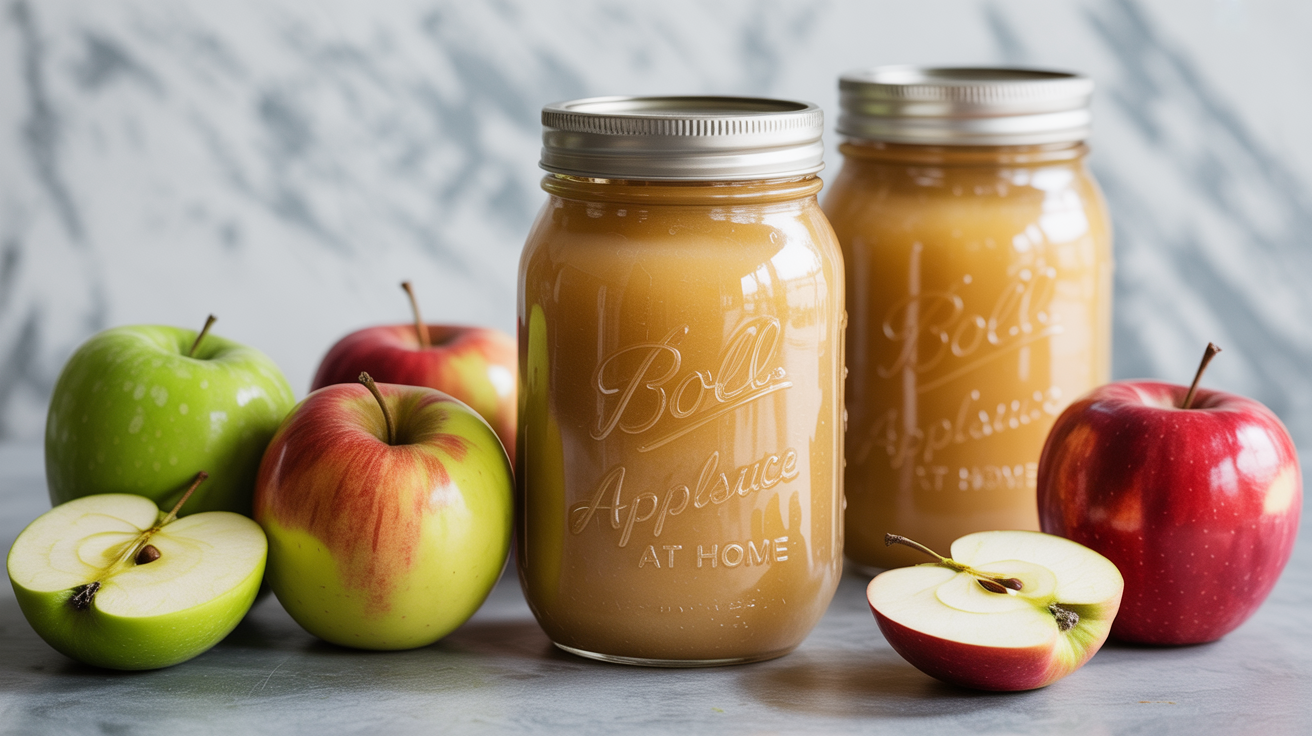
Applesauce is one of the most approachable water-bath canning projects for a beginner. Apples are naturally high-acid, so they fall comfortably within the range that water-bath canning handles safely. A batch takes a few hours start to finish, keeps well on a pantry shelf, and gives you a chance to practice the core skills you will use in every future canning project.
Before you begin, pull out a current tested recipe from the USDA Complete Guide to Home Canning or the Ball Blue Book. Processing times and headspace measurements come from laboratory testing, not estimation, and this guide will not substitute for them.
At a Glance
- Apples are high-acid, so applesauce is safe for water-bath canning with no added acid needed, as long as you use a tested recipe.
- Only smooth, strained applesauce has a tested processing time. Chunky sauce is a different product and is not covered by these times.
- Standard headspace is 1/2 inch, and processing runs 15 to 35 minutes depending on jar size and altitude.
- Hot-pack is the only method used for applesauce; there is no raw-pack option because raw apples cannot be packed as a sauce.
- Browning after canning is a cosmetic issue from oxidation, not a safety problem, and a splash of lemon juice during cooking slows it.
- Never shorten the processing time for altitude. Above 1,000 feet, water boils below 212°F and the jar contents need longer to reach a safe temperature.
Choose Your Apples
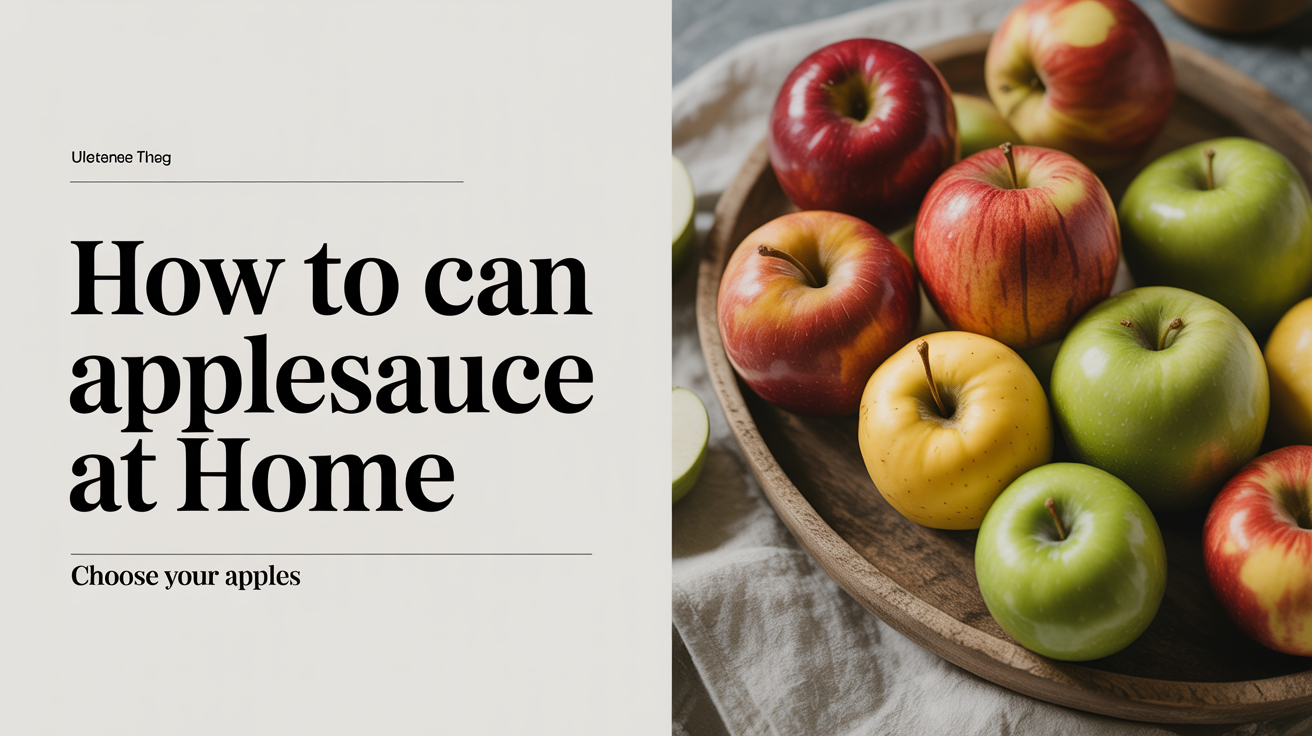
Flavor matters most here because you control very little else. A blend of tart and sweet apples gives balanced sauce without needing much added sugar. Good tart choices include Granny Smith and Jonathan. Softer sweet apples like Golden Delicious cook down quickly. A roughly even mix, about half tart and half sweet by weight, works well for most palates. As a rough yield guide, plan on about 2.5 to 3 pounds of fresh apples per pint jar of finished sauce, since apples lose significant volume as they cook down and get strained.
Avoid fruit that is bruised deep into the flesh or shows mold. Surface bruising or a few soft spots are fine once cut away, but any mold should disqualify the whole apple since mold spreads further than it appears.
One important rule applies to the final product: only smooth, strained applesauce has tested processing times. If you prefer a chunkier texture with apple pieces still intact, that is not covered by standard applesauce canning times. You would need a tested recipe specifically written for that style, or freeze it instead.
Cook the Applesauce
Peel, core, and quarter the apples. Place them in a large, heavy-bottomed pot with a small amount of water, about 1/2 cup per 4 pounds of apples, to prevent scorching. Cook over medium heat, stirring often, until the apples are completely soft, about 15 to 25 minutes depending on the variety.
Run the cooked apples through a food mill or blender, then through a fine-mesh strainer to remove any remaining solids. The result should be uniformly smooth. This step is not optional from a safety standpoint; chunky sauce is a different product.
Sweeten to taste if you like, using sugar, brown sugar, or honey. Spices such as cinnamon are a personal choice. Return the sauce to the pot and bring it back to a simmer before packing.
Hot-Pack into Jars
Hot-packing means filling your jars with hot food rather than raw. For applesauce, this is the standard approach. It reduces floating, helps remove air bubbles, and produces a more compact pack.
Ladle the simmering applesauce into clean, hot jars. Headspace is the gap between the surface of the food and the underside of the lid. NCHFP's tested applesauce recipe calls for 1/2 inch of headspace, and your own recipe source will confirm the exact measurement. What is headspace and why does it matter explains why that gap is not flexible; too little can prevent a proper seal, and too much can affect the vacuum.
Run a thin spatula or bubble remover around the inside of each jar to release trapped air. Wipe the rim with a clean damp cloth, place the lid and band, and tighten fingertip tight, meaning snug but not wrenched down. Over-tightening can prevent the lid from venting properly during processing.
Process in a Water-Bath Canner
For a full walkthrough of the water-bath method, see How to Water-Bath Can: A Step-by-Step Guide for Beginners. Here is how it applies to applesauce specifically.
Fill your water-bath canner with enough water to cover the tops of the jars by at least one inch. Bring it to a full rolling boil before you lower in the rack of filled jars. Start timing only once the water returns to a full boil with the jars submerged.
Your tested recipe will give you the processing time for your jar size and your altitude. Do not shorten it for any reason. High altitude reduces the boiling point of water, which means the food inside the jars does not reach the same temperature. If you are above 1,000 feet in elevation, your recipe will include an altitude adjustment table. Use it. As a reference point, NCHFP's tested times for hot-packed applesauce in a boiling-water canner run 15 minutes for pints and 20 minutes for quarts at sea level to 1,000 feet, climbing to 25 minutes (pints) and 35 minutes (quarts) above 6,000 feet. Always confirm the current figure for your own altitude band rather than relying on memory.
When the time is up, turn off the heat and let the canner sit for five minutes before lifting out the jars. Set them on a towel with space between each jar and leave them undisturbed for 12 to 24 hours.
Check Seals and Store
After the jars have cooled completely, check each seal. Press the center of the lid; it should be concave and firm, with no flex or bounce. Remove the band and try to lift the lid with your fingertips. A properly sealed lid will not budge. Checking seals after water-bath canning covers this step in detail, including what to do with any jars that did not seal.
Unsealed jars should go into the refrigerator and be used within a few days. Do not attempt to reprocess a jar of applesauce; reprocessing softens the texture significantly and the extra processing time is not something tested recipes account for.
Store sealed jars in a cool, dark location with the bands removed. Bands left on can hide slow leaks or rust in place. Label each jar with the contents and the date. Properly processed applesauce generally retains good quality for about 12 to 18 months, though safety and quality are separate considerations. Follow the guidance in your tested recipe for its specific product.
If you ever open a jar and notice an off smell, unusual color, spurting liquid, or any sign that the seal was compromised, do not taste it. When in doubt, throw it out.
Yield and Batch Planning
| Fresh apples (unpeeled) | Approx. finished applesauce | Pint jars | Quart jars |
|---|---|---|---|
| 2.5 to 3 lb | About 1 pint | 1 | - |
| 5 to 6 lb | About 1 quart | 2 | 1 |
| 20 to 24 lb | About 4 quarts | 8 | 4 |
Yields vary by apple variety, ripeness, and how much water cooks off, so treat this as a planning estimate rather than a guarantee. Weighing apples before you start makes it easier to scale a batch to how many jars you actually have clean and ready.
Frequently Asked Questions
Can I use any applesauce recipe from the internet?
Not for canning purposes. The only safe option is a tested recipe from a recognized authority such as the USDA, the National Center for Home Food Preservation (NCHFP), or current editions of Ball canning guides. Untested recipes, including family recipes that were used for decades, have not gone through the scientific testing that establishes safe processing times for your jar size and altitude.
Can I add other fruit to the applesauce before canning it?
Only if you have a tested recipe that includes those additions. Mixing in pears, peaches, or other fruit changes the density, pH, and heat penetration of the product. Standard applesauce processing times are tested for plain applesauce. A fruit blend without its own tested times should not be water-bath canned.
Does the type of apple change the processing time?
No. Processing times for canned applesauce are not based on the apple variety but on the consistency and density of the finished product. As long as your applesauce is smooth and strained, the tested time from your recipe applies regardless of which apples you used.
Why does my applesauce turn brown after canning?
Browning in canned applesauce is an aesthetic issue, not a safety one. It usually comes from oxidation during cooking or from air bubbles left in the jar. NCHFP's guidance on maintaining color in canned fruit recommends holding cut apples in an ascorbic acid solution before cooking to slow browning; a small amount of lemon juice added during cooking has a similar effect. Thorough bubble removal before placing the lid helps as well. If the jar sealed correctly and shows no other signs of spoilage, the product is safe to eat.
What is the difference between hot-pack and raw-pack for applesauce?
Applesauce is always hot-packed because raw apples cannot be packed into jars as a sauce. Hot-pack vs raw-pack: what's the difference covers this distinction in more depth for fruits and vegetables where both options exist. For applesauce specifically, the choice is already made for you by the nature of the product.
Can I can applesauce without added sugar?
Yes. Sugar in applesauce is entirely for taste and does not affect the safety of water-bath canning, since the acidity of the apples is what makes the process safe. If you prefer unsweetened sauce, simply omit the sugar; the processing time and headspace stay the same either way.